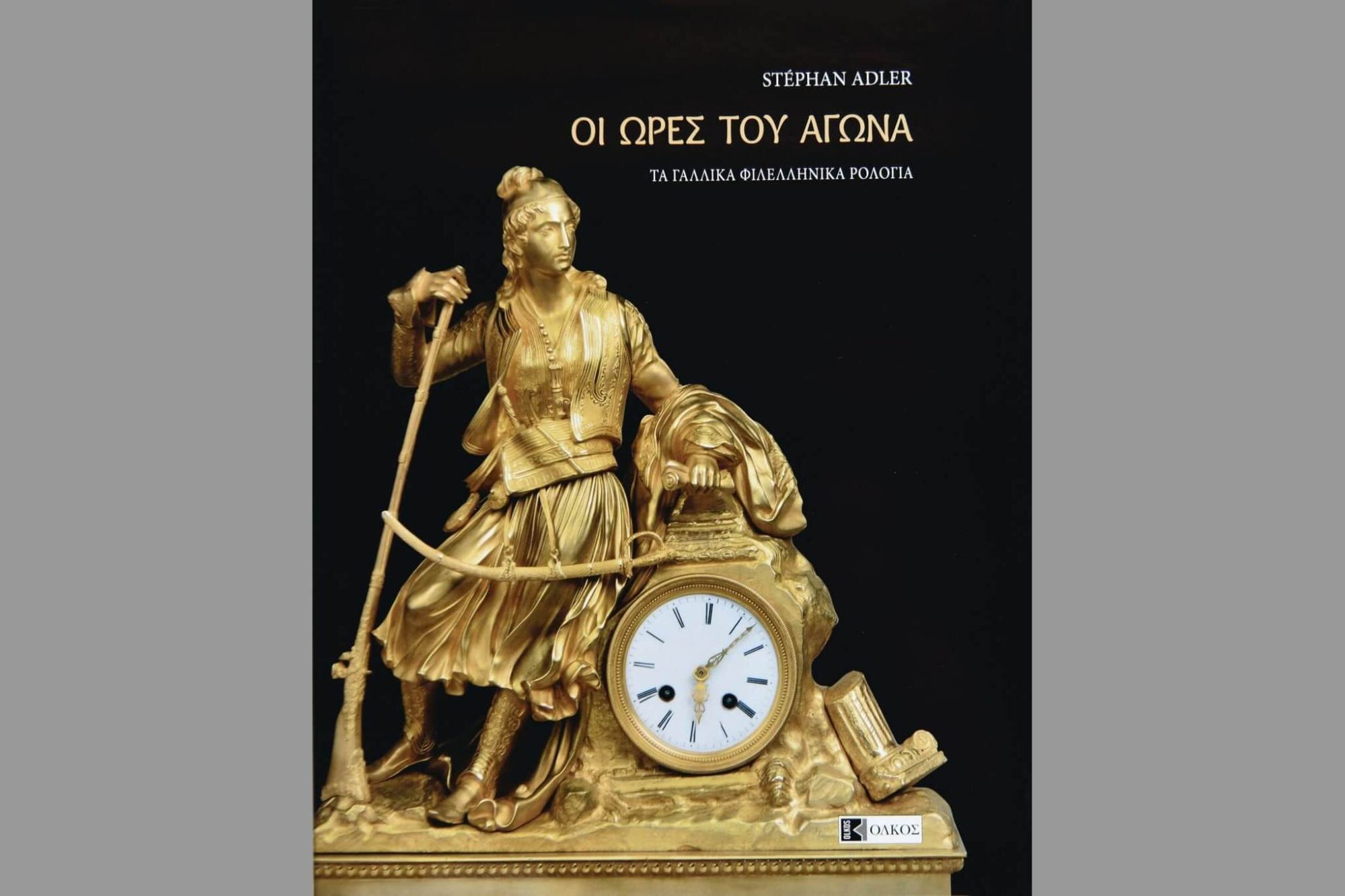
The Hours of the Struggle: French Philhellenic Clocks
Sector:
Publications
Implementation Body:
AEGEAS Non-Profit Civil Company
Year:
2018
The mantel clock is not merely a work of decorative art. It becomes a vehicle of knowledge and reflection, since memorable events or outstanding historical figures often served as the source of inspiration for its decoration. Although originally created to measure and dominate time, through its imagery it ultimately helps us remember history.
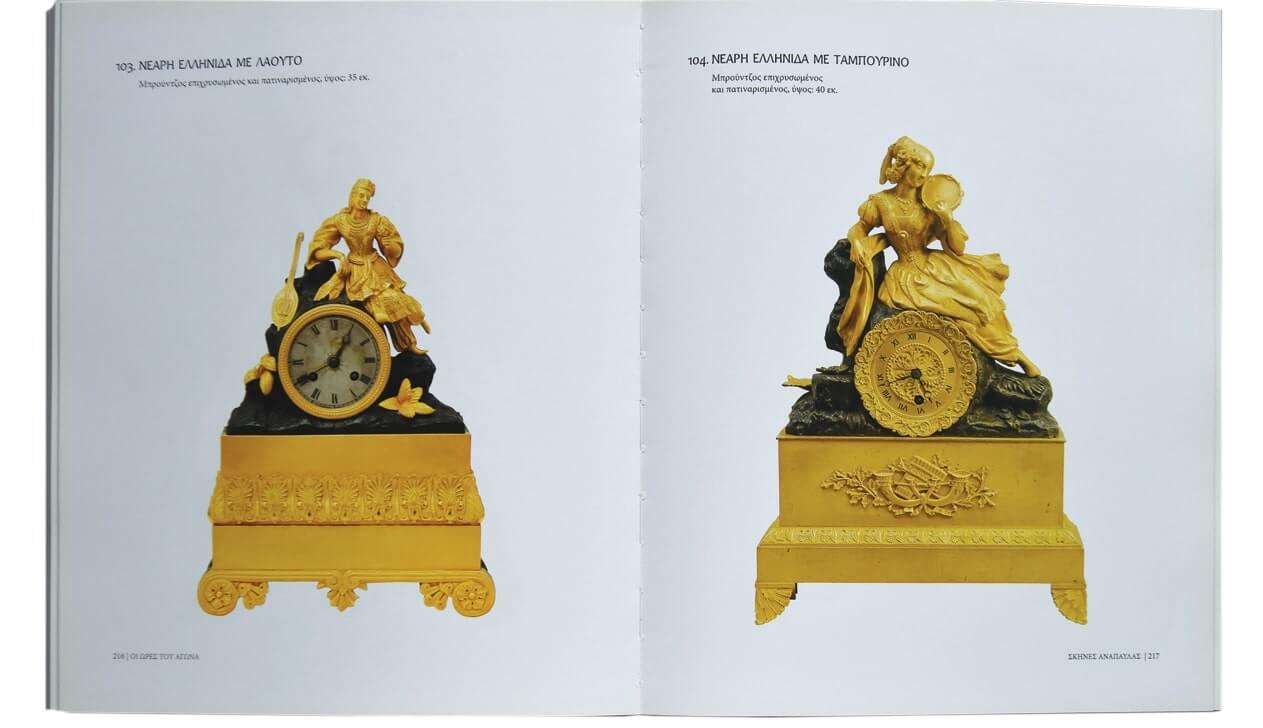
Stefan Adler presents a comprehensive publication dedicated to French Philhellenic clocks. Among the 147 clocks (in bronze and porcelain) that he records, important moments of the Greek War of Independence are represented, along with the great craftsmen of this art form, which constitutes a major artistic chapter of Philhellenism.
As the historian Giorgos Tolias notes in the introduction, these clocks are “small domestic monuments of the Greek struggle for liberation.” They express both the spirit of the Philhellenic movement and the fascination that the first national revolution in Europe exerted on Western public opinion.
The death of Markos Botsaris, Kanaris, Kolokotronis, the Exodus of Messolonghi, Ali Pasha, Byron, and other well-known Philhellenes are not simply subjects of decorative art. Crafted in bronze—often gilded—or porcelain, these clocks combine a taste for elegance and luxury while immortalizing the heroism of figures and events that shaped the Greek struggle and dominated the press, literature, and visual arts of the time.
In this lavish volume, each of the 147 models is accompanied by extensive documentation revealing the sources of inspiration for its design—such as engravings, paintings, decorative vases, porcelain plates, and other luxury objects.