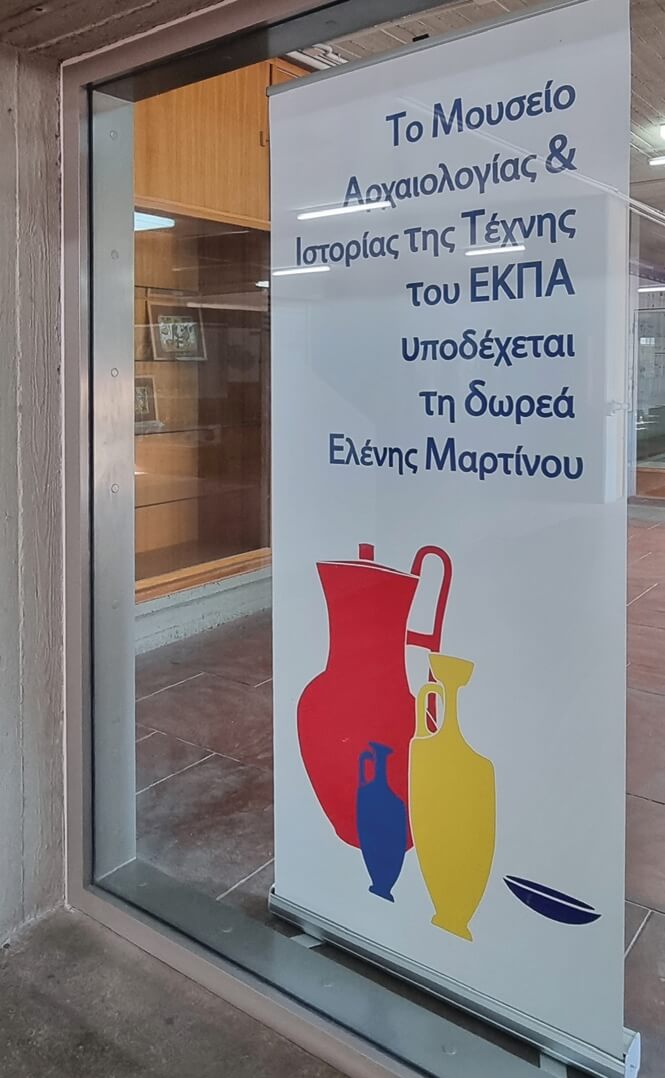
Museum of Archaeology and History of Art, National and Kapodistrian University of Athens
Sector:
Culture
Implementation Body:
AEGEAS Non-Profit Civil Company
Year:
2019
Location:
“Ioannis Martinos” Gallery, School of Philosophy, National and Kapodistrian University of Athens, Zografou
The Museum of Archaeology and History of Art of the National and Kapodistrian University of Athens is housed in the School of Philosophy at Zografou. Its official operation began in 1941 with the Regulatory Decree “On the establishment of a branch of teaching collections of Archaeology.” Through donations from state museums, professors, and private individuals, its collections were gradually enriched. The Museum’s eleven teaching collections include both casts and original objects spanning the entire chronological range from Prehistory to the present day.
The Museum’s primary aim is the education of archaeology students, while its educational and research mission is also of great importance. In its conservation unit and storerooms, objects from the University’s excavations and the Museum’s collections are preserved, conserved, documented, studied, and published. In addition, the Museum organizes temporary exhibitions of contemporary art, concerts, and lectures, and welcomes school groups as part of its educational programmes, fostering engagement with a broader, non-specialist public.
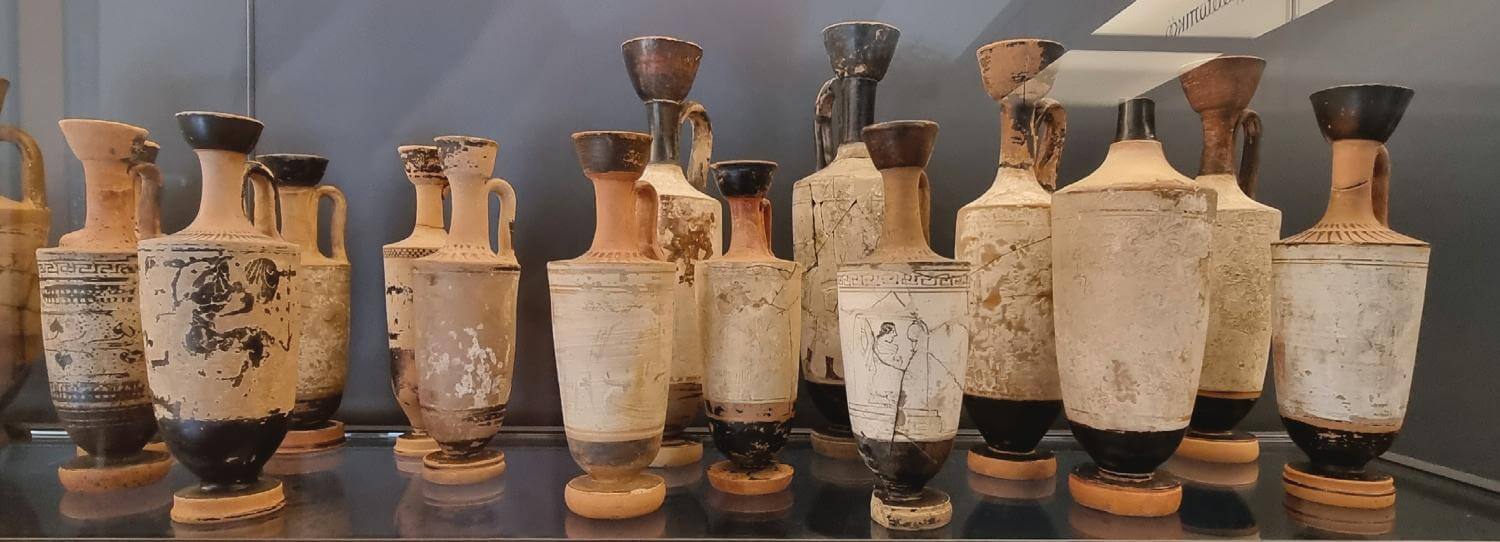
A landmark moment in the Museum’s history was the major donation of 855 ancient objects by Eleni Martinou, which had belonged to the collection of her father, Ioannis Martinos. Her words, “…I am particularly pleased that all these objects, which my father patiently assembled, have found here an ideal home to ‘converse’ with young people…,” eloquently explain the decision of Athanasios and Marina Martinou, through AEGEAS AMKE, to undertake the conservation of these objects and the construction of a new specially designed gallery within the Museum for their display.
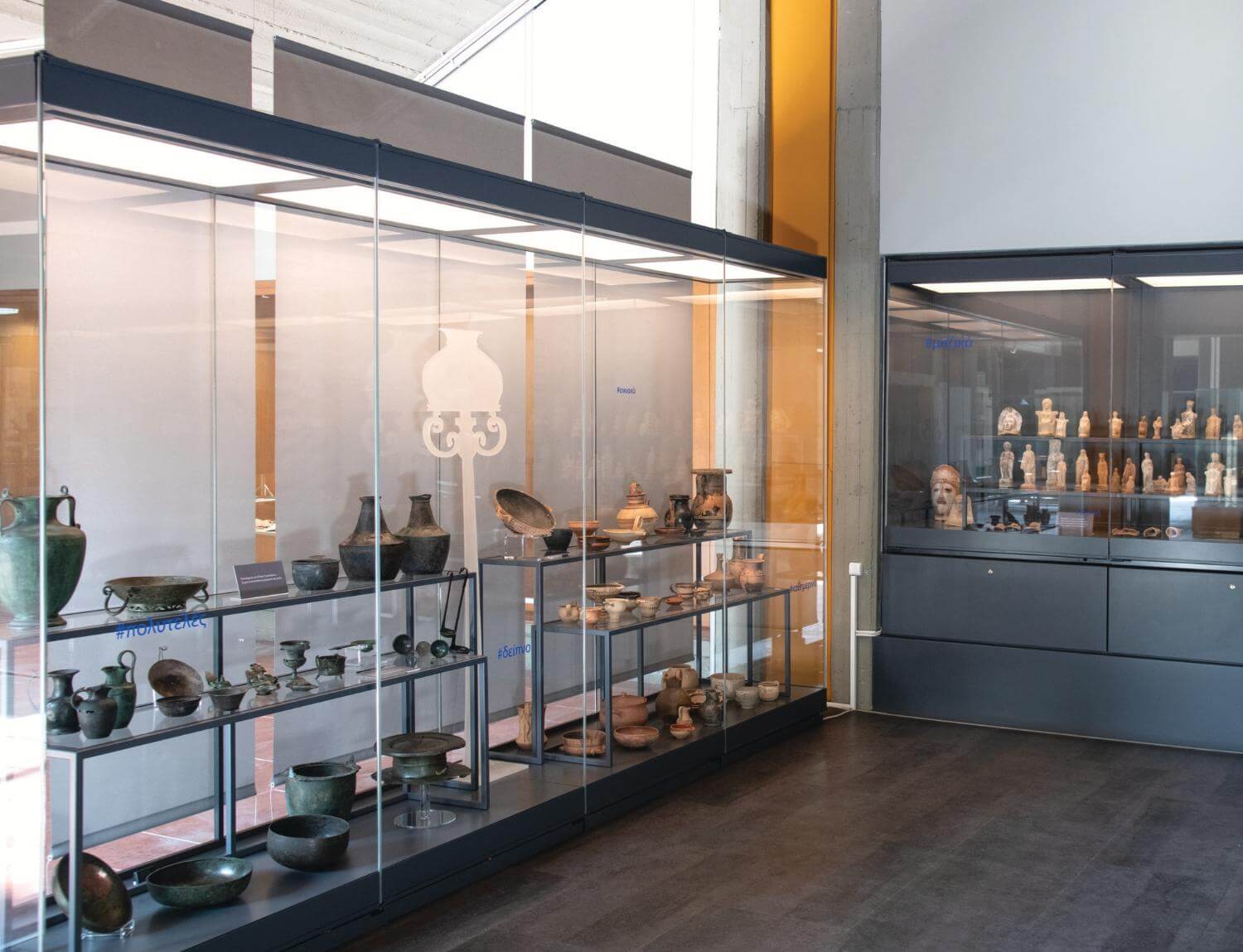
The new “Ioannis Martinos” gallery features display cases of contemporary design and technology, in which the majority of the donated collection is exhibited. The creation of this gallery served as the impetus for a further major donation by AEGEAS AMKE, namely the renovation of all the Museum’s spaces and the reinstallation of its entire collections. The necessary studies (architectural, museographic, museological, structural, and mechanical/electrical) have already been completed, and their implementation began in 2024.
DONATION OF THE NON-PROFIT CIVIL COMPANY AEGEAS
- Museological study and conservation of exhibits for the new “Ioannis Martinos” gallery.
- Creation of the new “Ioannis Martinos” gallery.
- Preparation of studies for the renovation of the Museum.
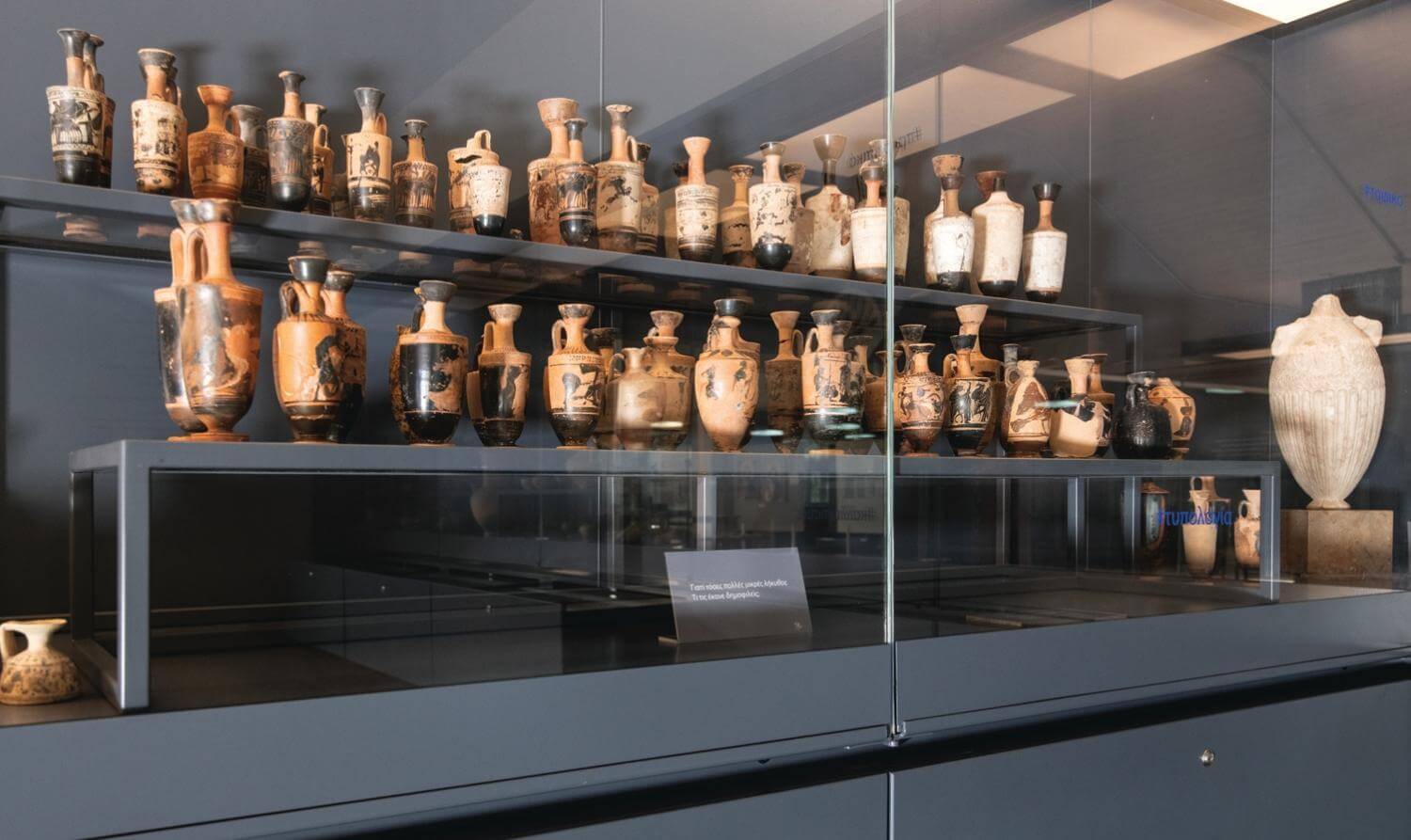
The new “Ioannis Martinos” gallery.
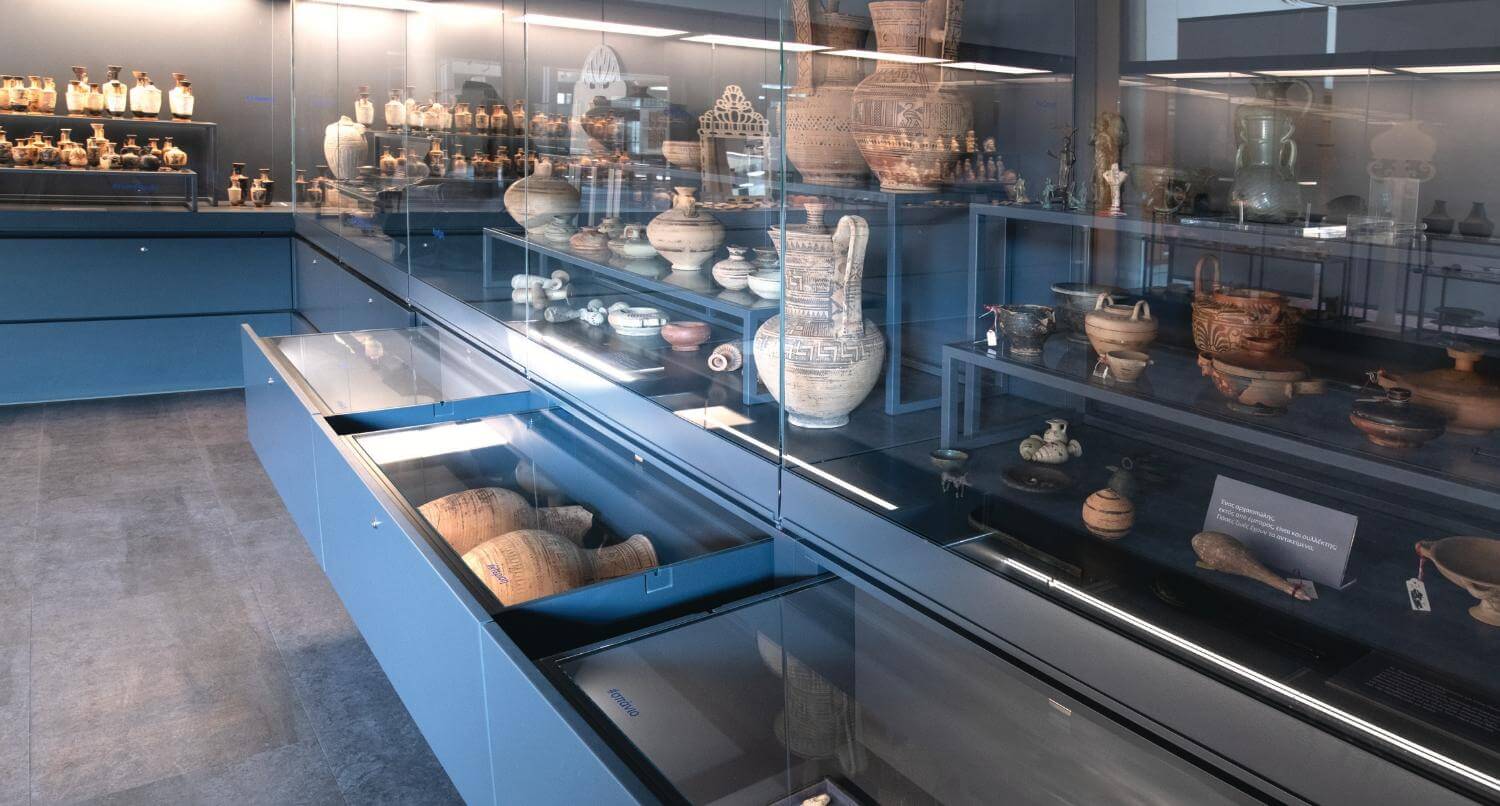
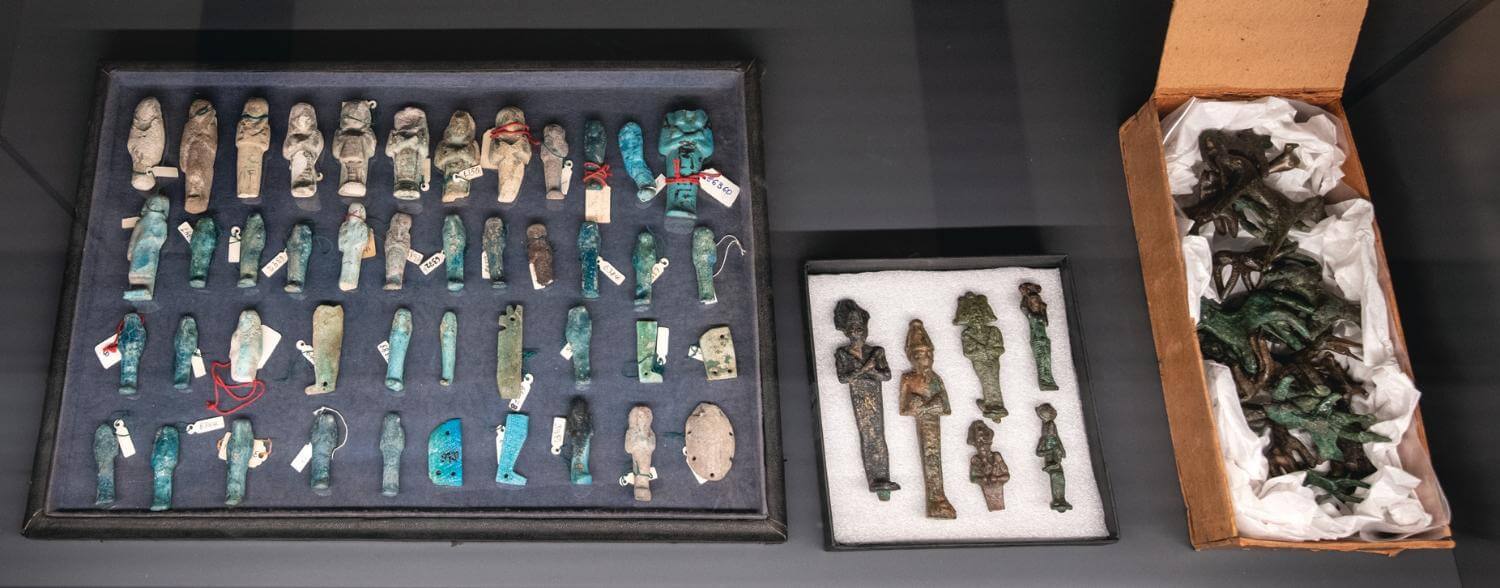
Objects from the Eleni Martinou Collection.
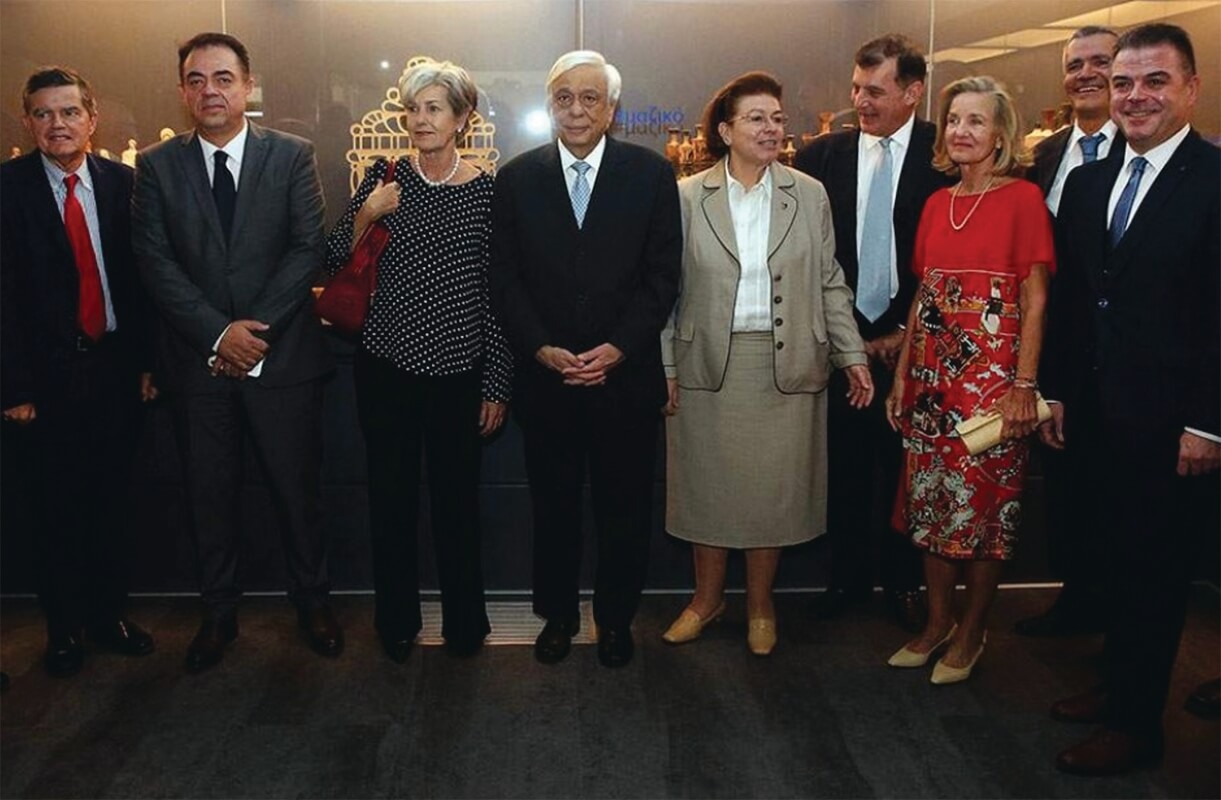
Inauguration of the “Ioannis Martinos” gallery (22 October 2019). From left to right: Athanasios Martinos, Dimitris Konstantopoulos, Eleni Martinou, Prokopis Pavlopoulos, Lina Mendoni, Thanos Dimopoulos, Marina Martinou, Achilleas Chaldaeakes.