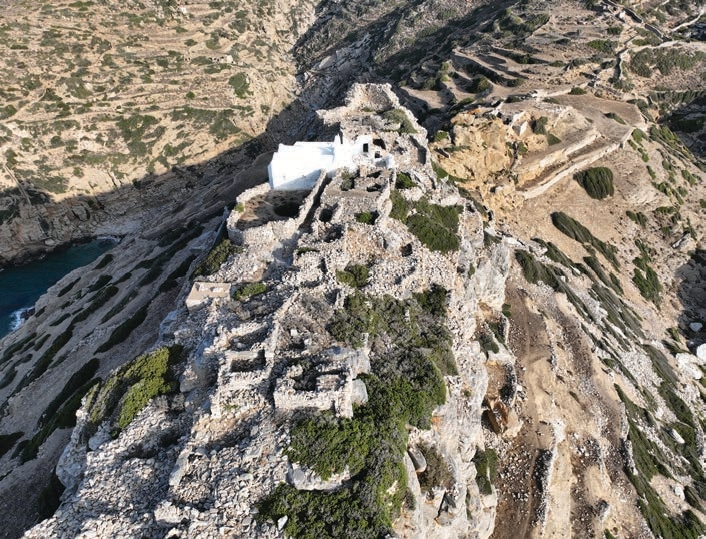
Kastri – Ancient Arkesine
Sector:
Culture
Implementation Body:
AEGEAS Non-Profit Civil Company
Year:
2024
Location:
Amorgos, Cyclades
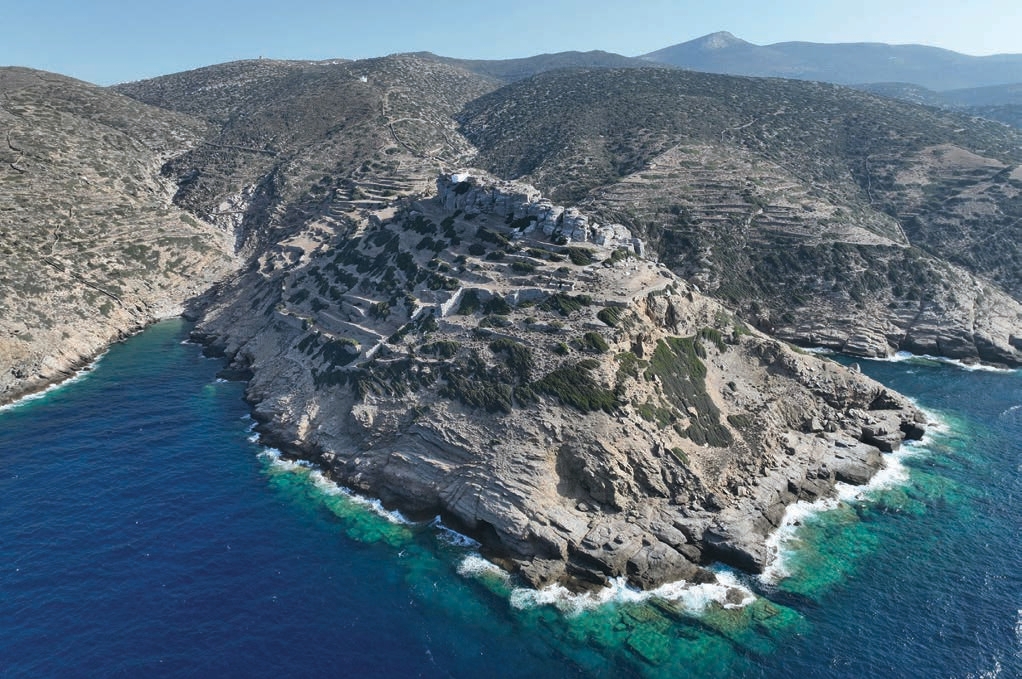
In 2024, the first systematic archaeological investigation of ancient Arkesine began in the Kastri area of Amorgos. According to historical sources, ancient Arkesine — known during medieval times as Kastri — was one of the three cities of Amorgos in antiquity, alongside Minoa and Aegiali.
The impressive remains of the ancient city and the medieval castle, as well as the significant movable finds that have been discovered in the area from time to time, attest to the richness and importance of the archaeological site, with much more expected to be revealed through systematic research.
Already in the first year of the excavations, archaeological work in the acropolis area brought to light finds of particular importance. The head of a figurine attests to human presence on the hill of Arkesine as early as the prehistoric period, most likely the 4th millennium BC, while the discovery of obsidian tools further reinforces the evidence of early habitation. Of special interest is an inscription dating to the 5th century BC, which documents for the first time the worship of Athena Pronaia on Amorgos.
Human activity in the acropolis area intensified once again during the Late Roman period through the Early Middle Ages (3rd–8th century AD). Equally significant were the finds from the other two sectors investigated in the lower city, including fragments of marble statues and ceramic figurines, coins, metal objects and inscribed pottery sherds, as well as walls and architectural members of monumental buildings.
As part of the excavation, the inscriptions scattered across the hill or incorporated into later dry-stone walls were digitally recorded. At the same time, vegetation around the surviving ancient fortification walls was cleared, with the aim of documenting them for topographical and architectural study.
DONATION OF THE NON-PROFIT CIVIL COMPANY AEGEAS
- Excavation, documentation, and conservation of archaeological material.
- Topographical and architectural documentation of the ancient remains.