Holy Monastery of Panagia Faneromeni
Sector:
Religion
Implementation Body:
AEGEAS Non-Profit Civil Company
Year:
2023
Location:
Salamis
The Holy Monastery of Panagia Faneromeni is located on the northwestern coast of Salamis. It is considered one of the most important and historic monasteries of the Saronic Gulf.
The founder of the Monastery was Lambros Kannelos who, according to tradition, came to Salamis in 1640 after experiencing a vision of the Virgin Mary. There, in the ruins of a Byzantine church, he discovered an icon of the Virgin and decided to establish a monastery on the site. He himself became a monk under the name Lavrentios and rebuilt the old church. He passed away in 1707 and was buried within the monastery.
During the Ottoman period, the Monastery became a refuge for many fighters and civilians. Throughout the Greek War of Independence, the monks provided food and care for civilians and combatants, operating an orphanage and a hospital. The Monastery also served as a meeting place for prominent figures of the struggle, including Ioannis Makrygiannis, Kitsos Tzavelas, Dimitrios Ypsilantis, and Georgios Karaiskakis.
The layout of the monastery around a central enclosure and the katholikon, together with the presence of two towers, evokes the form of a fortified monastery. Today, the complex includes chapels, monastic cells, kitchens, a refectory (trapeza), workshops, and storage facilities.
On the south side of the katholikon stands the Church of Saint Nicholas, where the Holy Relic (Sacred Skull) of Saint Lavrentios is kept. In front of the Royal Door lies the Saint’s tomb, while in the courtyard is the grave of the military leader Yiannis Gouras.
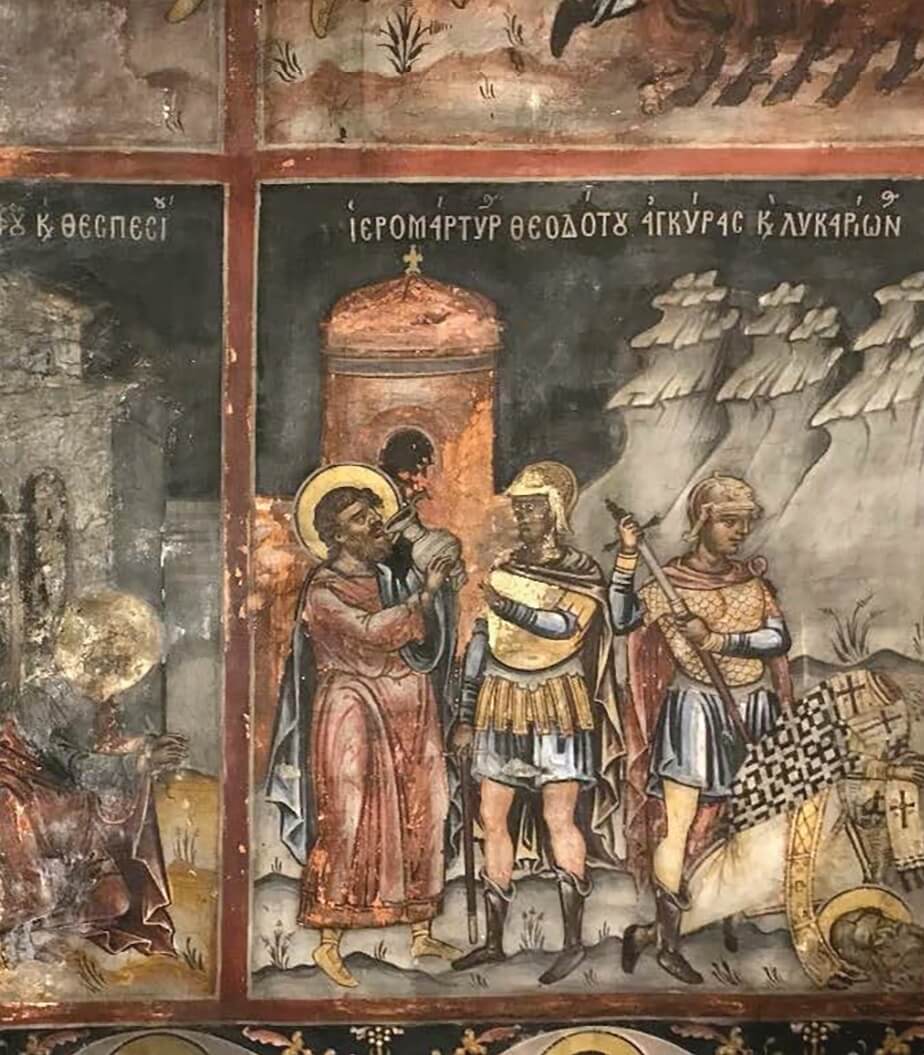
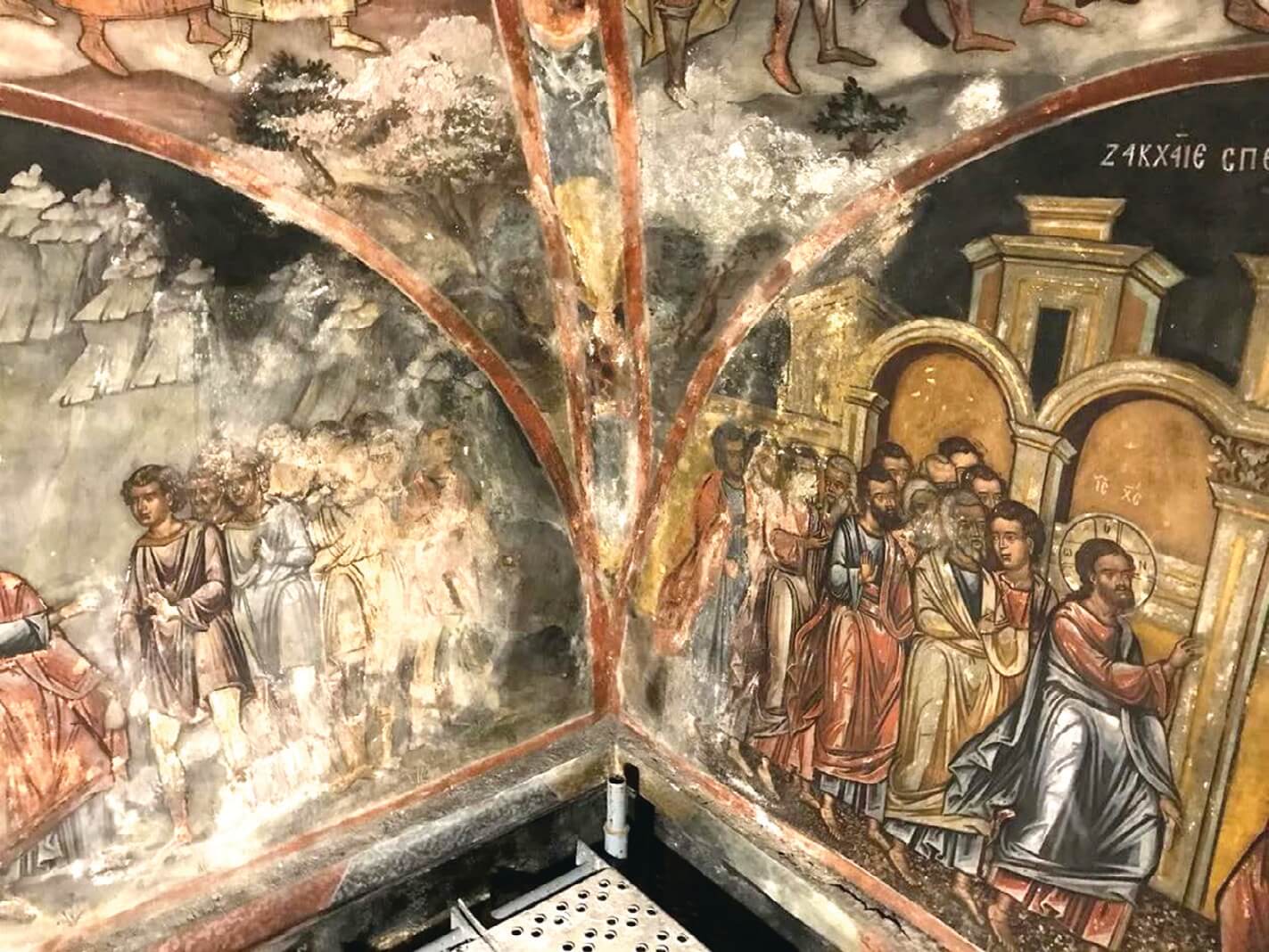
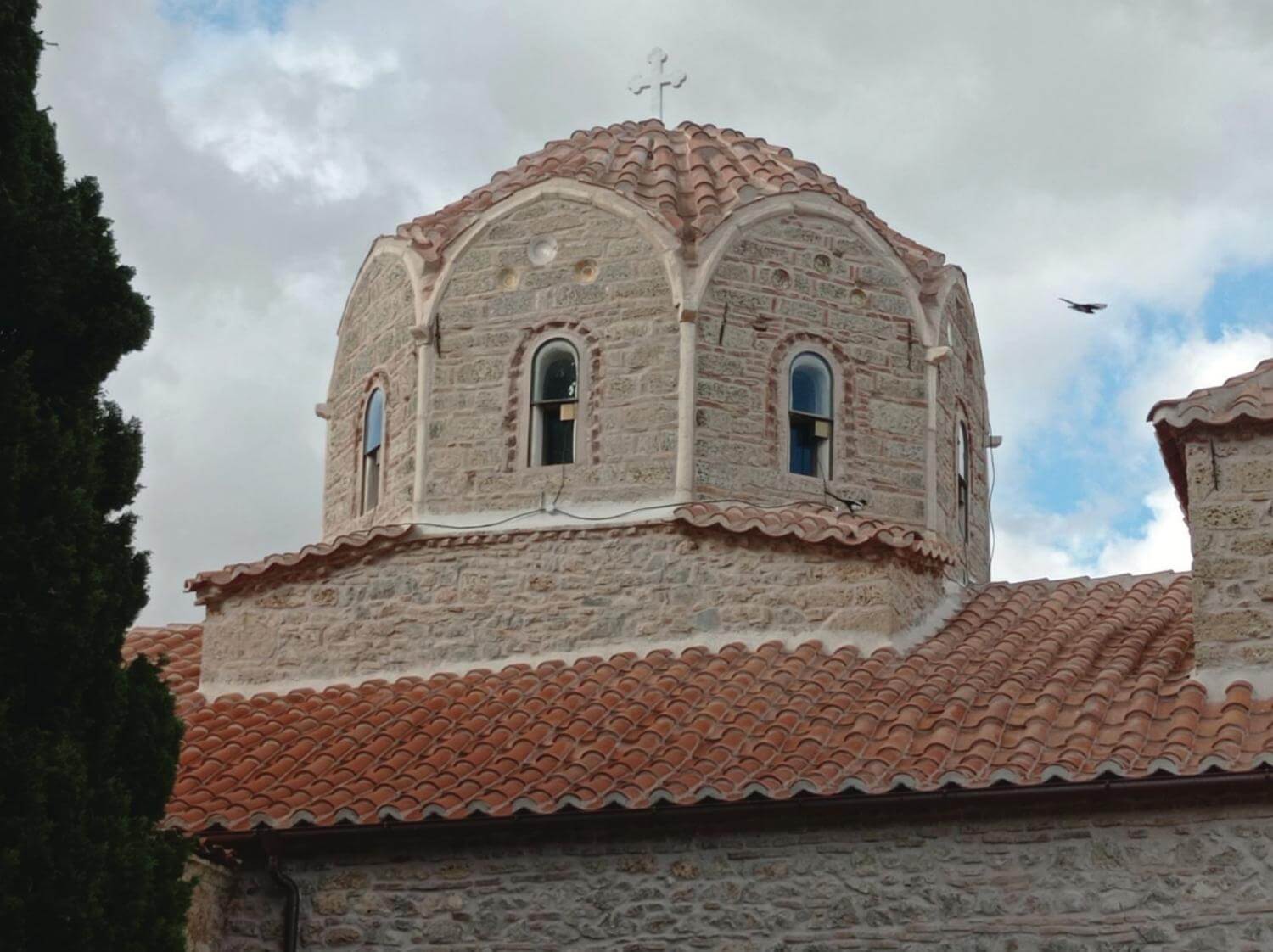
The katholikon is a three-aisled basilica crowned by an octagonal dome of the so-called Athenian type. At each corner of its roof rise square turrets, which were most likely used as hermitages. The interior was painted in 1735 and features more than 3,530 figures and scenes of exceptional artistic quality, created by the renowned iconographer Georgios Markos of Argos and his workshop.
The Monastery of Faneromeni remained a male monastery until 27 July 1944, when it was converted into a female monastery by the Metropolitan of Attica and Megaris, Iakovos.
With particular sensitivity to the monastery’s religious, historical, and artistic significance, AIGEAS AMKE has contributed through its donations to the protection and restoration of the katholikon and its painted decoration.
DONATION OF THE NON-PROFIT CIVIL COMPANY AEGEAS
- Study and restoration works of the roof of the katholikon.
- Survey and documentation study, and restoration works of the historic mortars and pointing of the façades of the katholikon.
- Conservation study and emergency protective measures for the wall paintings of the north and west walls of the katholikon.