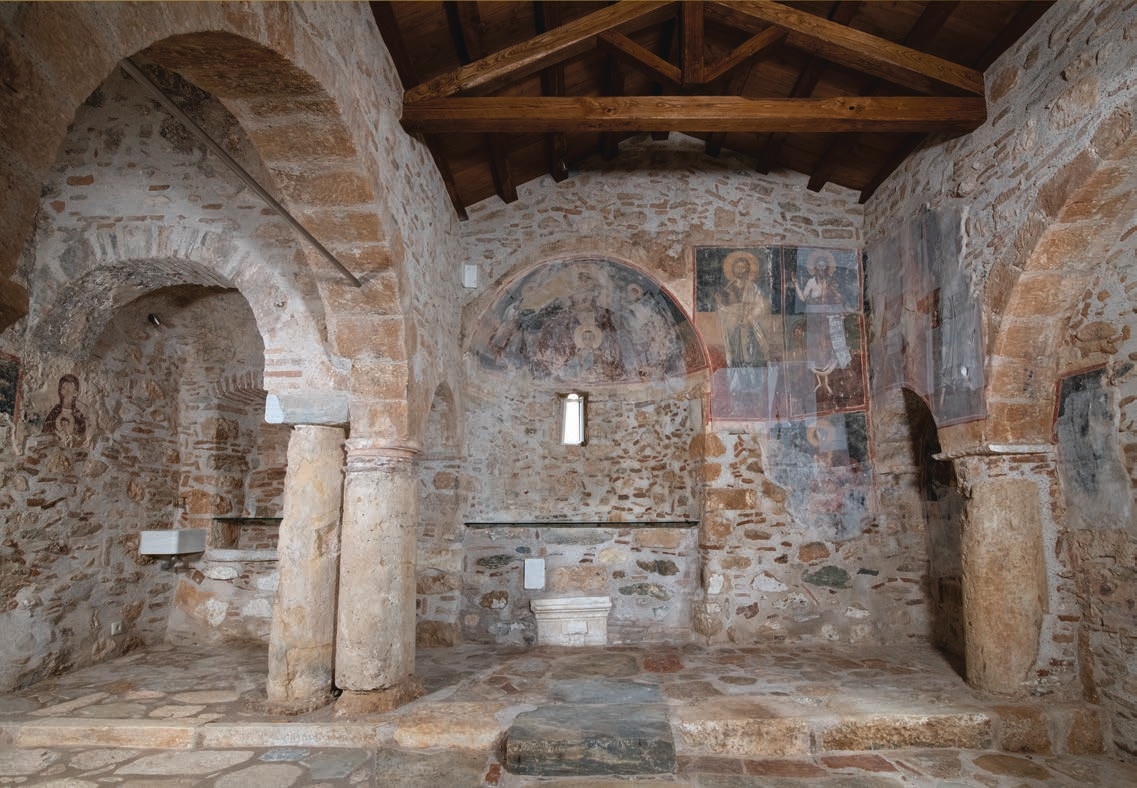
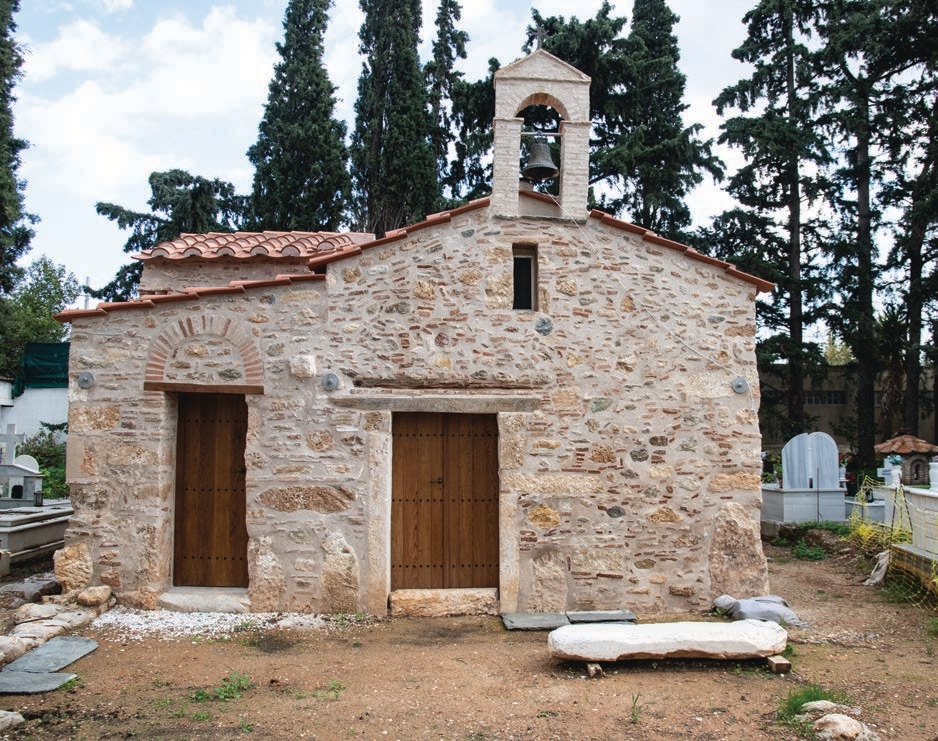
Holy Church of the Transfiguration of the Savior
Donation Receiver:
Holy Church of the Transfiguration of the Savior
Sector:
Religion
Implementation Body:
AEGEAS Non-Profit Civil Company
Year:
2024
Location:
Pikermi – Rafina
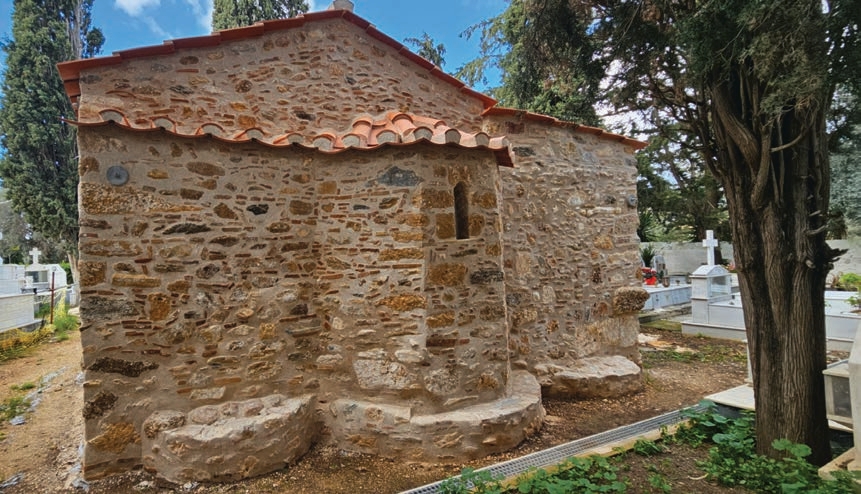
The Church of the Transfiguration of the Savior is located within the old cemetery of the Community of Pikermi. The history of the monument spans from antiquity to the modern era. Byzantine architectural members built into the masonry have been identified in the church, along with other evidence attesting to the area’s long history. It is believed that an Early Christian basilica once stood on the same site, upon which, probably in the 14th century, a cross-in-square church was constructed.
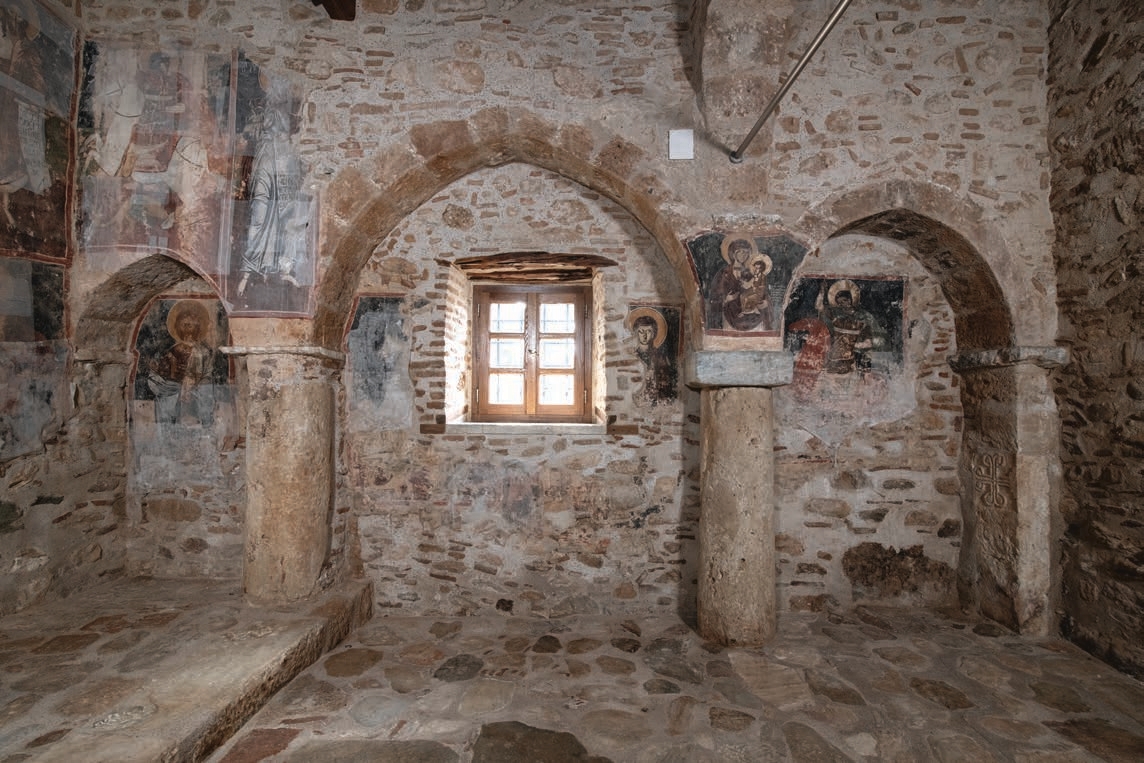
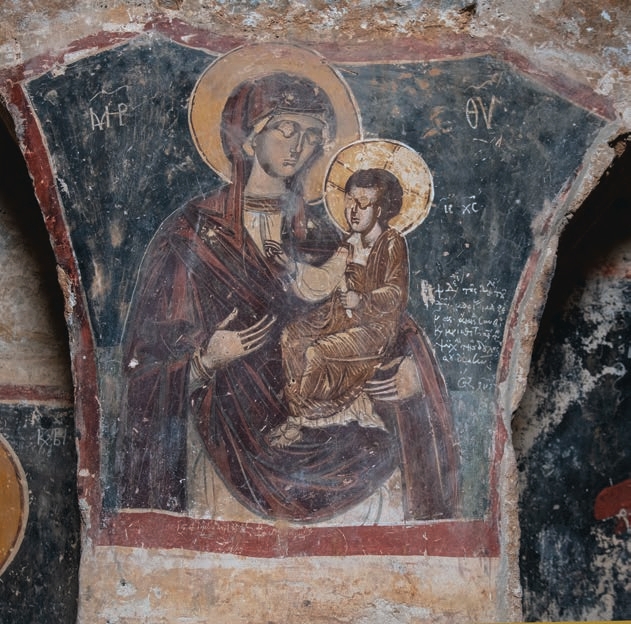
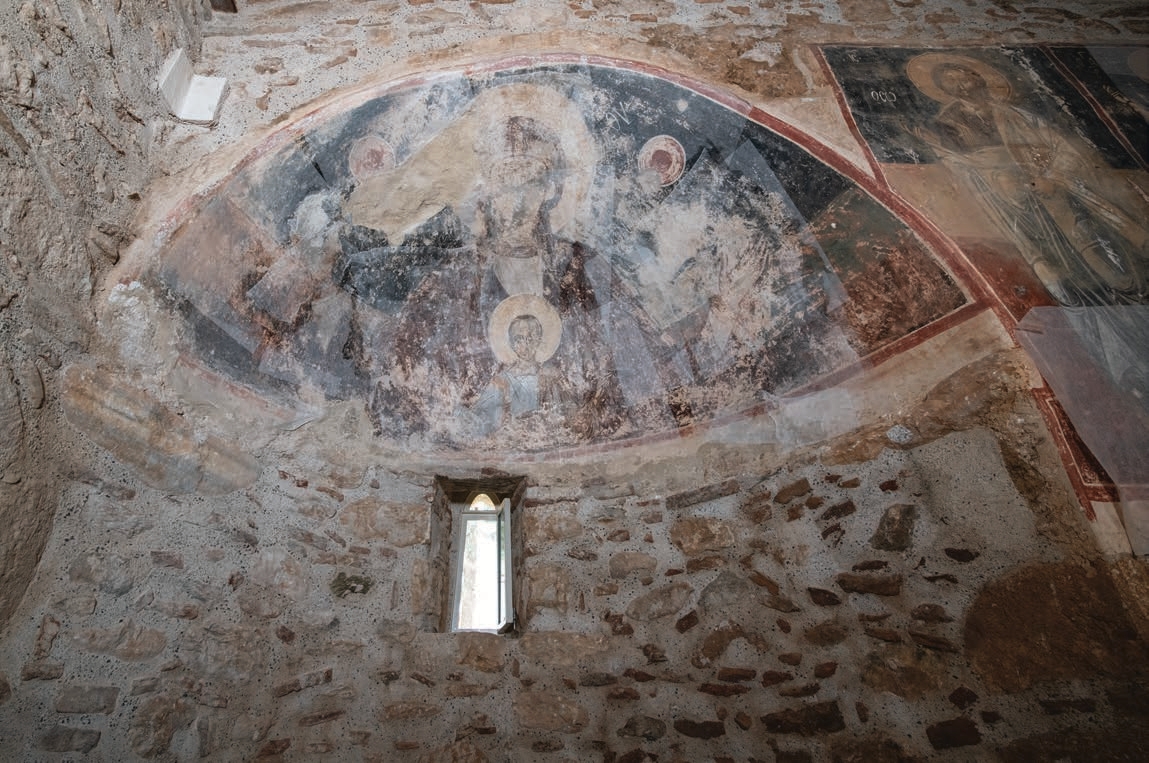
Its present two-aisled form, with a semicircular apse to the east, was shaped during the post-Byzantine period, following the conversion of the earlier church, from which only the northern section survives. The aisles of the main church communicate through two low arches resting on ancient columns in secondary use, while a second arcade is preserved on the south side. A significant part of the surviving painted decoration dates to around 1548–1549, according to the dedicatory inscription in the depiction of the Virgin Hodegetria on the southern arcade.
Various interventions were carried out on the church around the mid-19th century, as well as in 1924 by the landowner Alexandros Skouzes. Over time, these later additions, combined with the operation of the cemetery, caused serious structural problems, while the monument’s historical and archaeological significance had been completely degraded.
Through its donation, AEGEAS AMKE undertook the preparation of the necessary studies and the implementation of stabilization, restoration, enhancement, and conservation works on the church. Within the framework of the project, the Ephorate of Antiquities of Eastern Attica carried out an archaeological investigation, which brought to light important evidence regarding the history of the monument.
DONATION OF THE NON-PROFIT CIVIL COMPANY AEGEAS
- Preparation of studies and implementation of works for the stabilization, restoration, enhancement, and conservation of the Holy Church.
Photographs: Maria Stefosi.