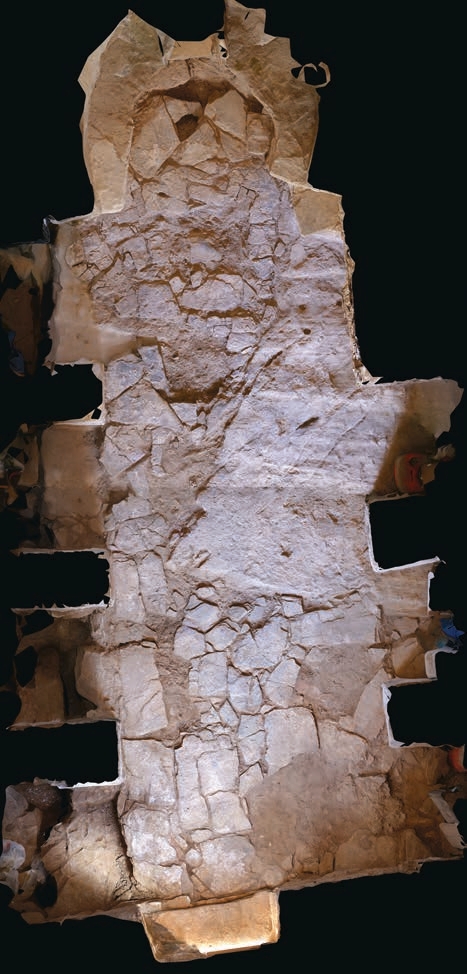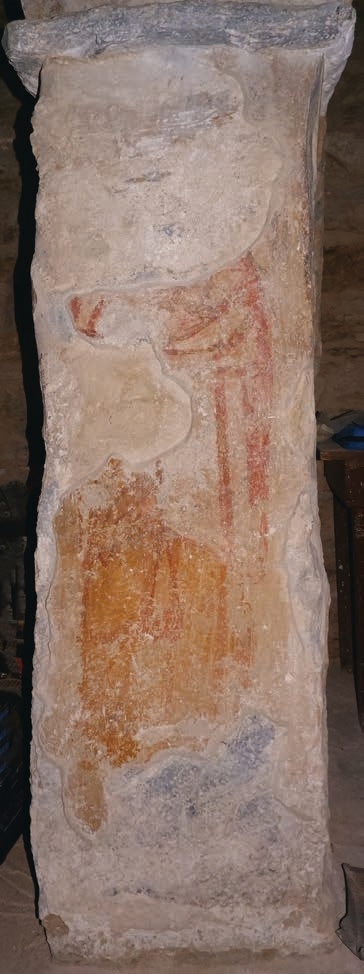
Uncovering of a wall painting beneath later layers of plaster.
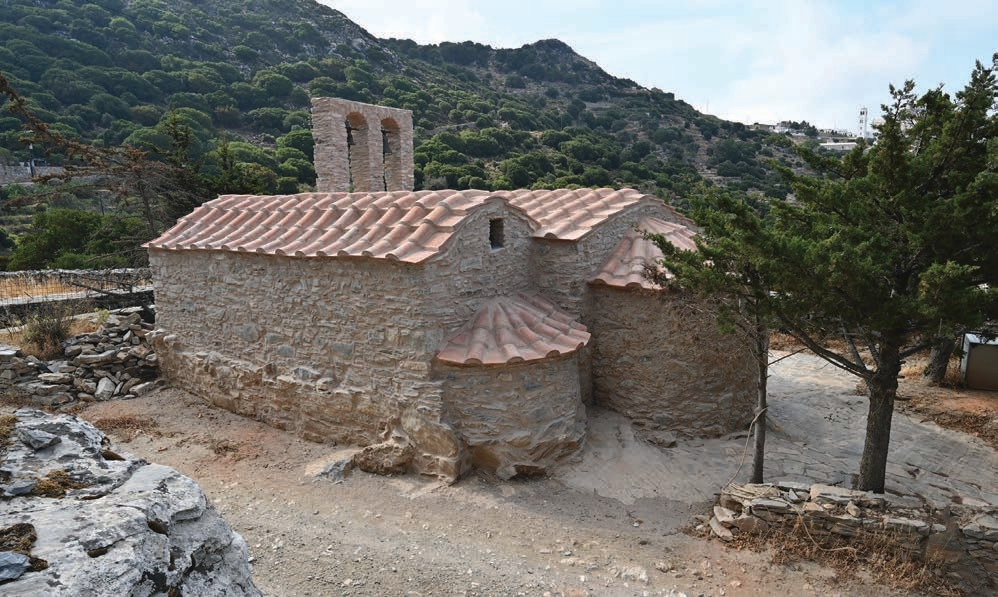
The Holy Church of Saint Isidore, located in the settlement of Atsipapi in the northeastern part of Naxos, is a two-aisled church with aisles of unequal width, terminating in a horseshoe-shaped apse to the north and a smaller apse to the south. A distinctive feature of the church is the roofing of the northern aisle, which is covered with large stone slabs supported by three successive transverse arches.
The walls and ceiling of the church preserve significant sections of wall paintings of great importance, which are gradually being revealed beneath later layers of plaster. Restoration studies have been carried out, and works have been implemented, including the uncovering of the wall paintings, the removal of later concrete additions, the consolidation of the masonry, and archaeological investigation.
The excavation revealed the original carefully paved stone floor, founded directly on the natural bedrock, as well as burials, most of which relate to secondary interments. An exceptional find was an undisturbed cist grave along the longitudinal axis of the church, beneath the paving, which contained the remains of one or two juveniles and was without grave goods.
Recognizing the importance of the monument, AEGEAS AMKE undertook the conservation and stabilization of the wall paintings, in collaboration with the Ephorate of Antiquities of the Cyclades.