Holy Church of Panagia Eleousa, Ymittos
Donation Receiver:
Holy Church of Panagia Eleousa, Ymittos
Sector:
Religion
Implementation Body:
AEGEAS Non-Profit Civil Company
Year:
2024
Location:
Papagou, Attica
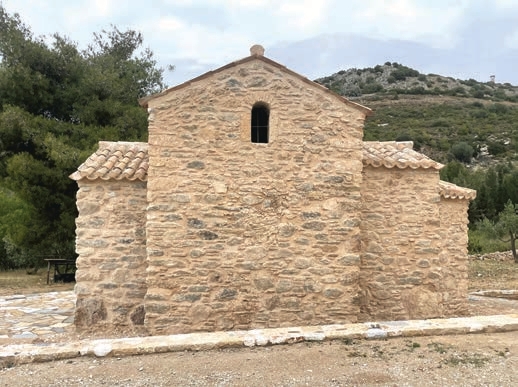
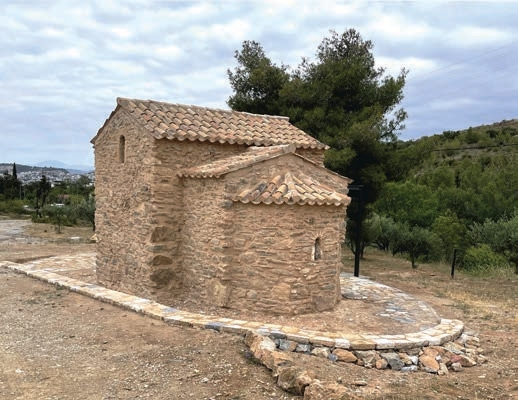
The church is located on the foothills of Mount Ymittos, near the Holy Monastery of Saint John the Theologian, of which it is a dependency (metochion), in an area particularly well known and popular with hikers. It belongs to the architectural type of the cross-vaulted church, with the transverse arm projecting to the north and south. Its overall dimensions are approximately 4.80 × 6.40 m, with the addition of the three-sided sanctuary apse on the exterior.
The church exhibited significant problems due to natural deterioration and the aging of its materials, but primarily as a result of numerous inappropriate and poorly executed interventions, such as the covering of the roof, later layers of plaster, the modern iconostasis, the flooring, and the window and door frames, all of which had altered the monument’s aesthetic character.
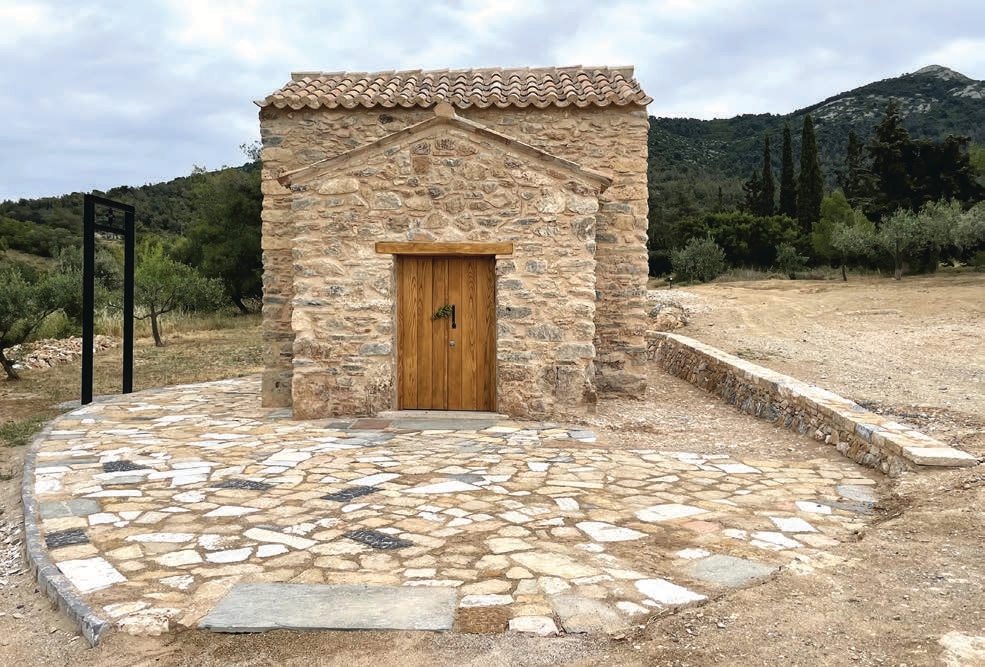
Within the framework of AEGEAS AMKE’s donation, an architectural study was prepared and the conservation and restoration of the post-Byzantine Church of Panagia Eleousa was carried out. The interventions aimed to address the church’s structural problems, enhance its aesthetic quality, and highlight its architectural, historical, and artistic value. For this purpose, all unsightly and technically inappropriate additions resulting from later, makeshift repairs were removed.
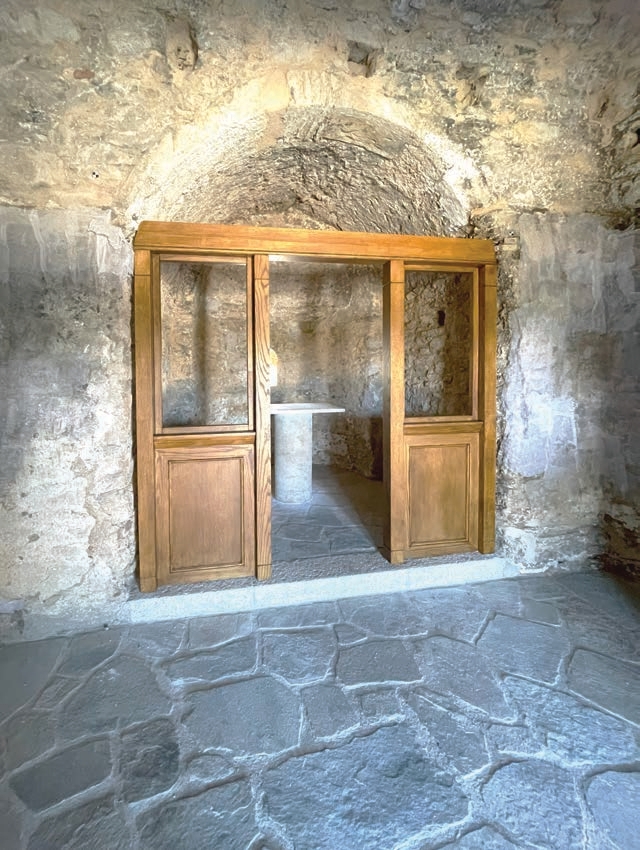
This was followed by the stabilization of the walls and vaults through the application of new pointing, both inside and outside the church, using materials compatible with the original ones. A new stone floor was installed within the church and in the immediate forecourt, while the window and door frames were replaced and a new wooden iconostasis was constructed. During the removal of the later plaster layers, fragments of painted decoration dating to different phases were uncovered. These findings were documented and stabilized by a specialized team of conservators. In addition, a new metal bell tower was erected on the north side of the church.
DONATION OF THE NON-PROFIT CIVIL COMPANY AEGEAS
- The donation included the preparation of an architectural restoration study, as well as the implementation of conservation and restoration works on the church.