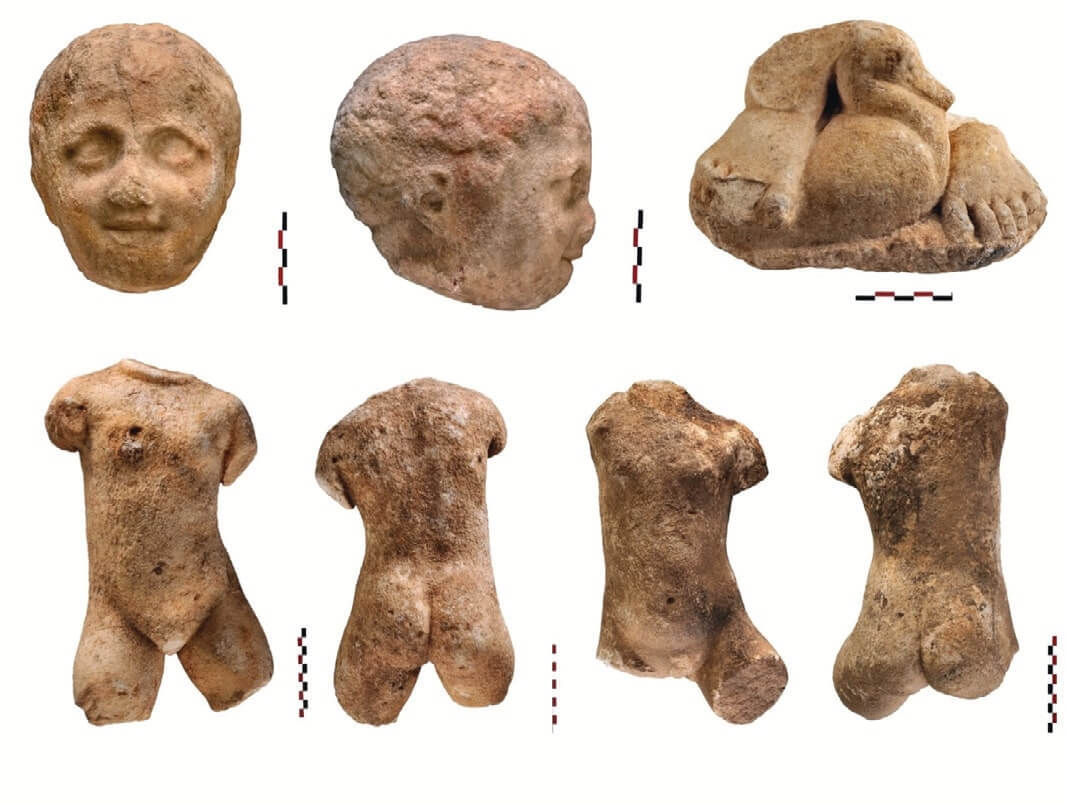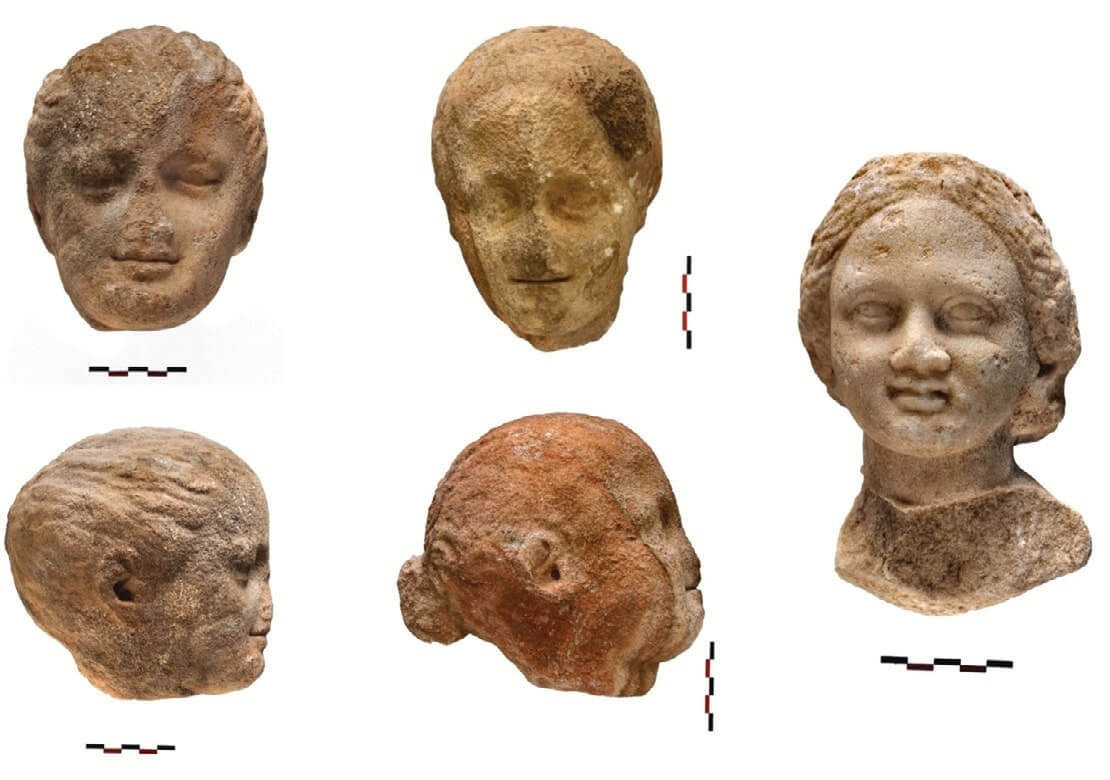
Marble sculptures of classical-Hellenistic times from the sanctuaries of the Upper City.
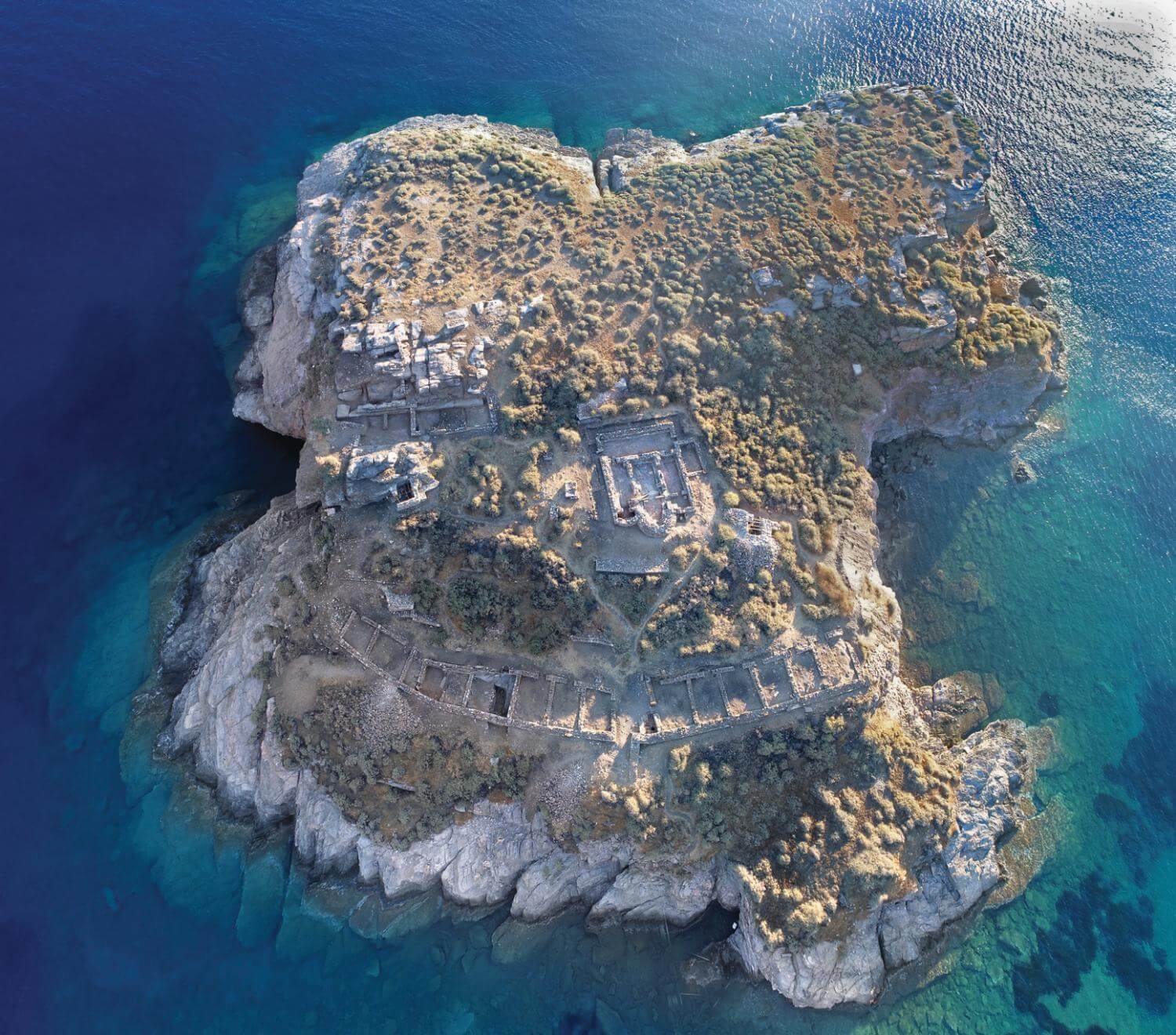
The University of Thessaly excavation at the site of Vryokastro on Kythnos and the islet of Vryokastraki began in 2002 and is ongoing, bringing to light the ancient city of Kythnos. Habitation on the acropolis was continuous from the twelfth century BC until the sixth-seventh century AD. The antiquities on Vryokastro hill are located on successive terraces. One of the most important discoveries is the unlooted sanctuary of Archaic, Classical and Hellenistic times. Its twin temple was found undisturbed, with all the precious ex-votos in situ. To the south of the temple two altars were excavated, as well as an extensive sacral deposit (apothetes) from which hundreds of valuable votive offerings were recovered. This is one of the richest deposits of finds in the Cyclades and contained vases, figurines, jewellery, tools, precious stones, seal-stones, and so on. To the west of the sanctuary was a monumental retaining wall, close to which was a public building, probably a prytaneion, of the Classical-Hellenistic period. Excavated on the Upper Terrace of the hill was a complex of public buildings of Classical-Hellenistic times, which are identified with sanctuaries of Asklepios, the Samothracian Gods and Aphrodite, as well as a bottle-shaped cistern 7.5 m deep, inside which many vases had been discarded, as well as marble statues.
In 2018, excavation began on the rocky islet of Vryokastraki, which in antiquity formed part of the hill of the ancient city. Moreover, an underwater survey conducted in the bay of Mandraki—the ancient harbour of Vryokastro—brought to light a section of the submerged coastal fortification wall and important marble sculptures of the Roman period.
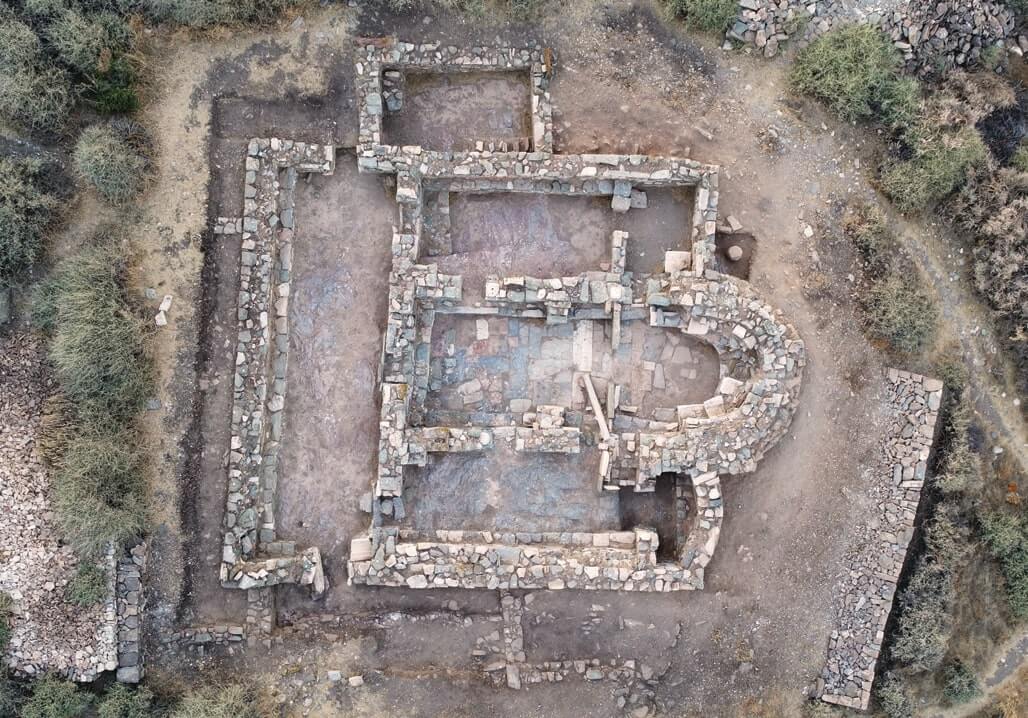
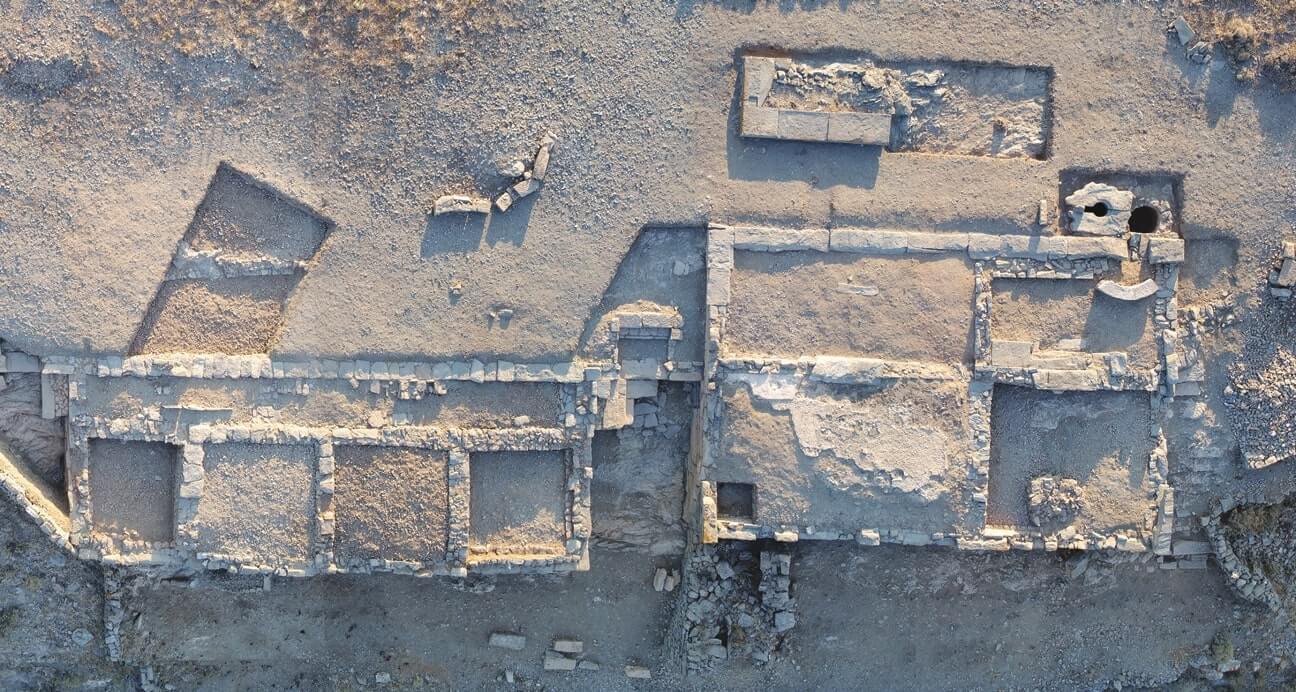
At Vryokastraki, significant ancient remains were uncovered, dating from the Early Cycladic period (3rd millennium BC) to the 7th century AD. The most important of these are a monumental sanctuary of the Geometric and Classical periods, an elongated Late Antique building with many rooms, and a three-aisled Early Byzantine basilica, one of the best preserved in the Cyclades.
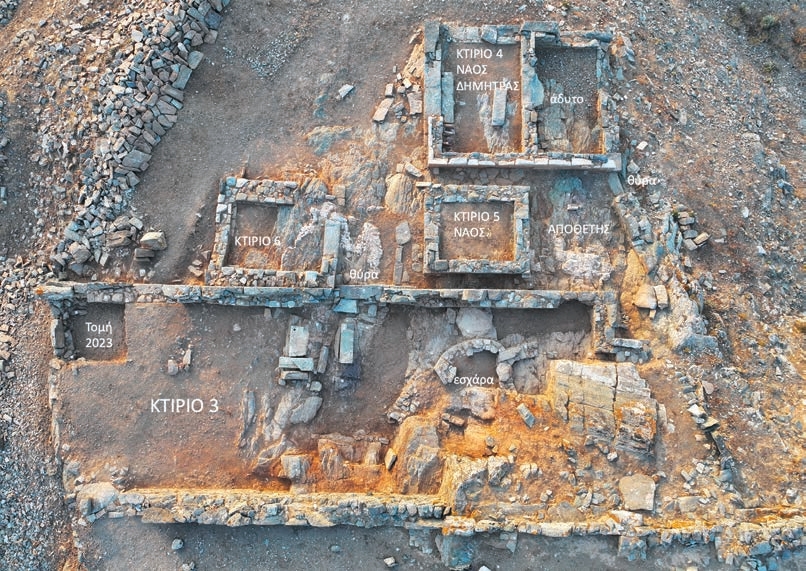
From 2021 to the present, the excavation has focused on the ancient Acropolis, following the acquisition of properties by AEGEAS AMKE on behalf of the Hellenic State. A significant sanctuary had already been identified there during the surface survey of 1990 and was systematically investigated between 2021 and 2024. As indicated by inscriptions incised on ritual drinking vessels, the sanctuary was dedicated to Demeter and Kore. Two temples were excavated, along with an elongated ritual building.
The votive offerings were numerous, consisting mainly of clay figurines of women, children, and animals, clay lamps, and multi-nozzled ritual lighting vessels. Large quantities of exceptionally fine pottery were also discovered, together with many metal, glass, and marble finds. On the southern side of the acropolis plateau, an extensive residential complex is being excavated, dating from the Early Iron Age (10th–8th centuries BC) to the Hellenistic period. This complex, together with Vryokastraki, appears to represent the early settlement nucleus of the ancient city. It is likely that the city’s military garrison was stationed here, along with their families.
The excavation of the ancient city of Kythnos is of great archaeological and historical importance, as well as educational value, since dozens of students receive training there each year.
Images source: Kostas Xenikakis