Μουσείο – Ιστορική έκθεση για τις Σφαγές της Χίου
Sector:
Culture
Implementation Body:
AEGEAS Non-Profit Civil Company
Year:
2022
Location:
Holy Monastery of Saint Minas, Chios
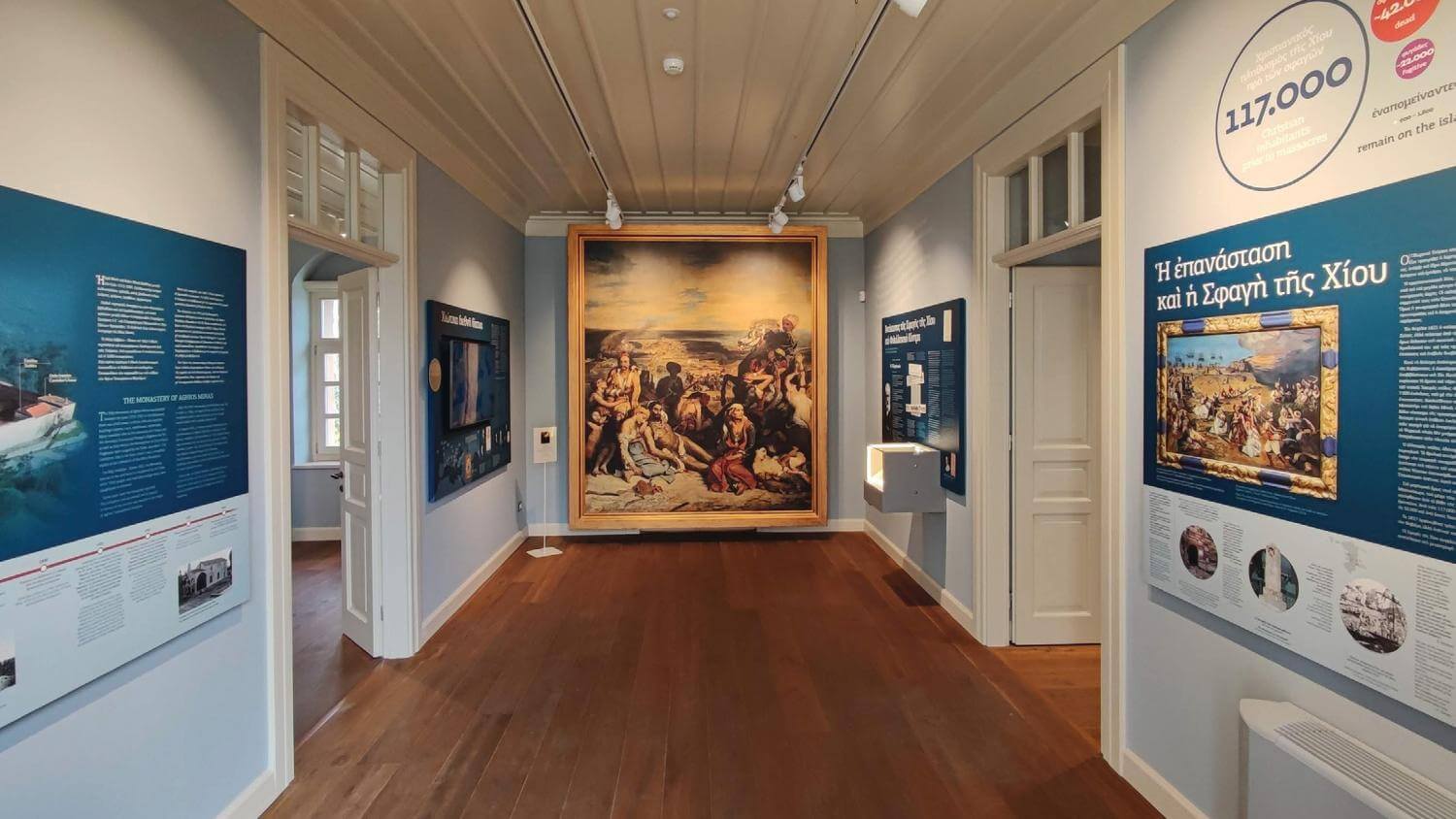
The Museum, entitled “ΙΣΤΟΡΙΗΣ ΑΠΟΔΕΞΙΣ ΗΔΕ” (“Proof of This History”), was established within the Monastery of Saint Minas on the island of Chios, at the very site where more than two thousand people were massacred by the Ottomans during Easter of 1822.
The exhibition is divided into five sections, presenting the prosperity of the island prior to the massacres, followed by the tragic events themselves, which left fewer than 2,000 survivors out of a population of 117,000. It highlights the contribution and sacrifice of the clergy of Chios during the Revolution and the massacres, as well as the decisive impact these events had in sparking the Philhellenic movement in Europe and America.
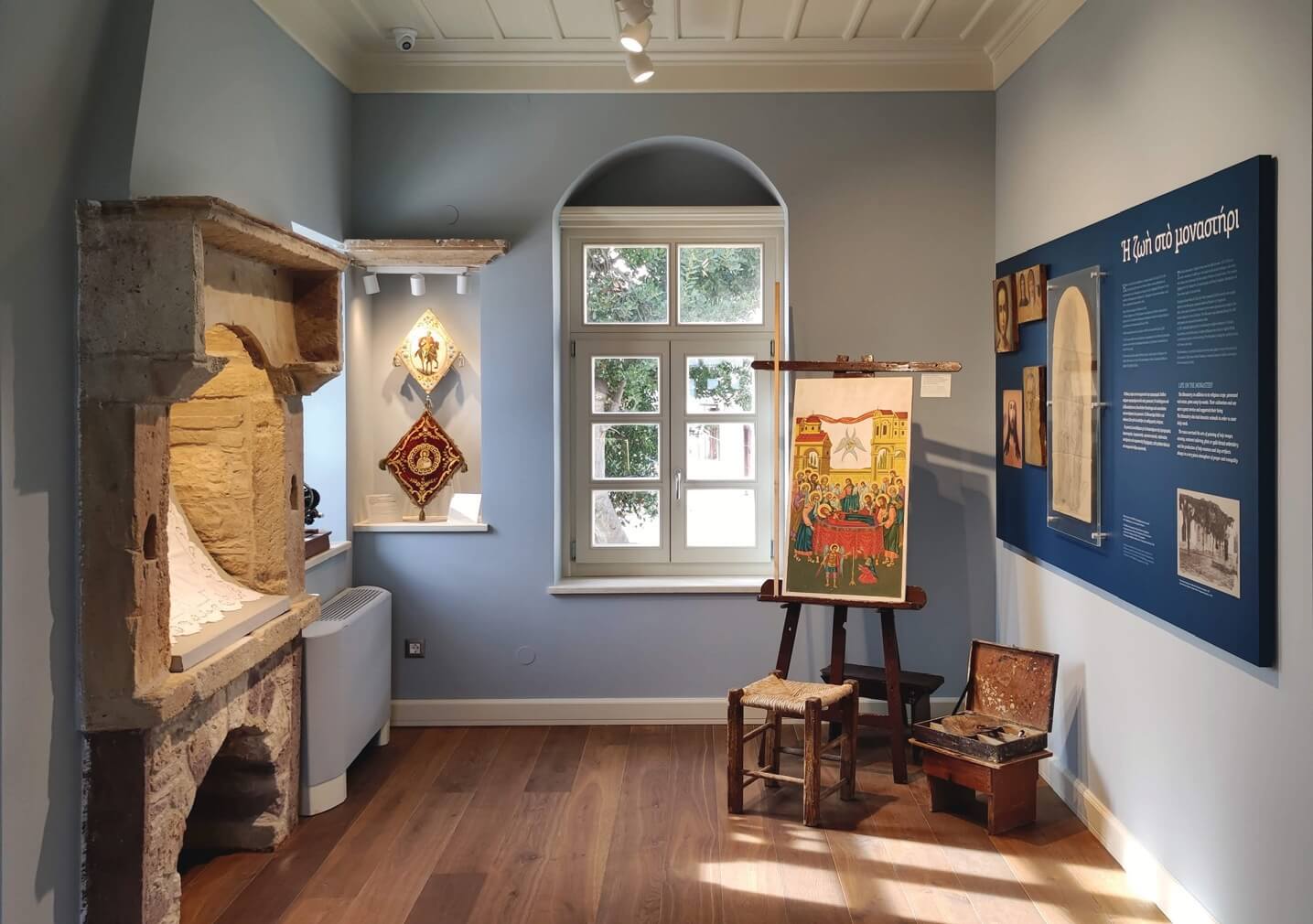
The final section is dedicated to the activities of the monks and to the Monastery of Saint Minas as a timeless place of pilgrimage and remembrance of the massacres, both for distinguished visitors to the island and for the people of Chios themselves.
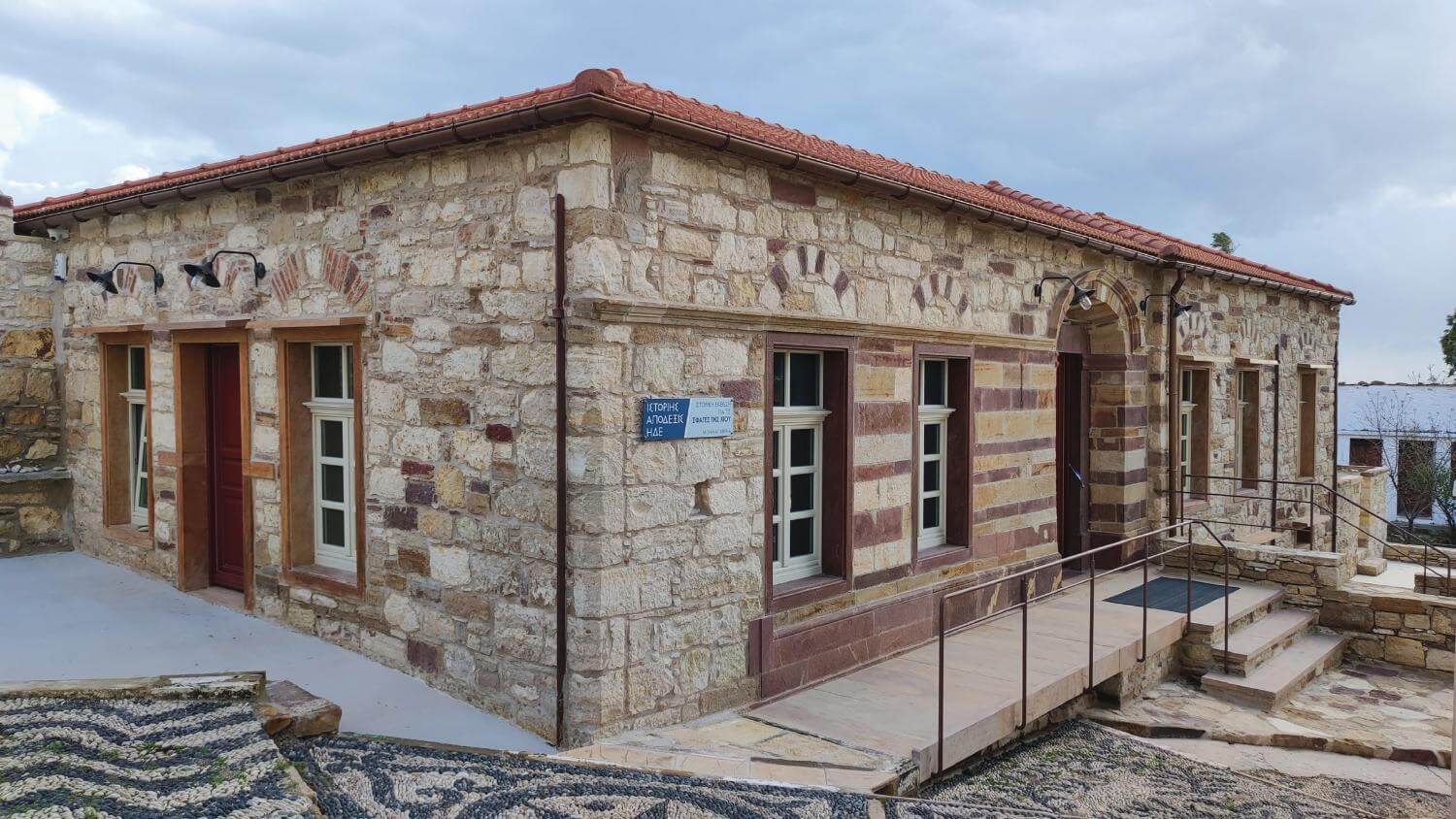
According to the inscription at its entrance, the building housing the Museum was constructed in 1883, probably as a guesthouse (archontariki) or as the seat of the Ecclesiastical School for which the monastery was renowned. Before the Greek War of Independence, this school had been attended by Patriarch Gregory V and Metropolitan Platon Frangiadis of Chios.
Following the establishment of a new monastic brotherhood after 1931, the building was remodelled to accommodate monks’ cells, offices, and workshops for icon painting and ecclesiastical embroidery, crafts for which the monastery remained well known until recent years.
DONATION OF THE NON-PROFIT CIVIL COMPANY AEGEAS
- Renovation of the icon painting and ecclesiastical embroidery workshop and its conversion into a museum.