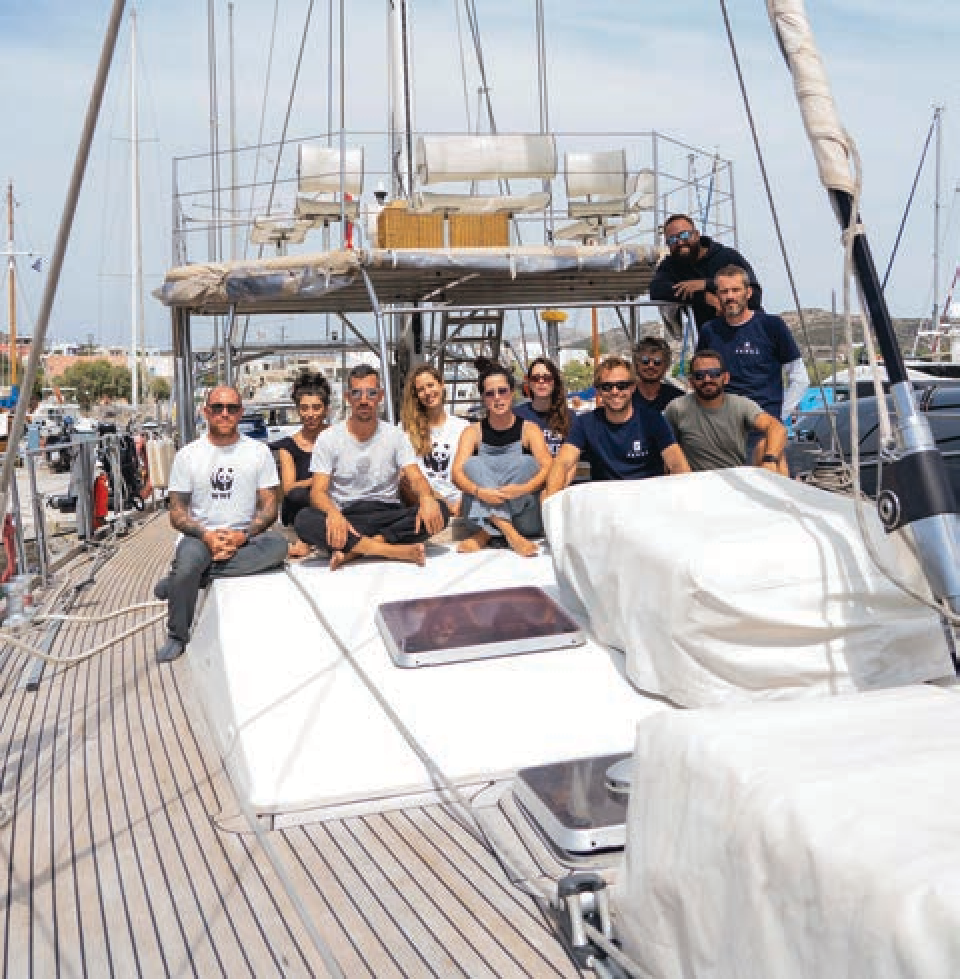
Experimental transplantation of young Posidonia shoots at Sounio
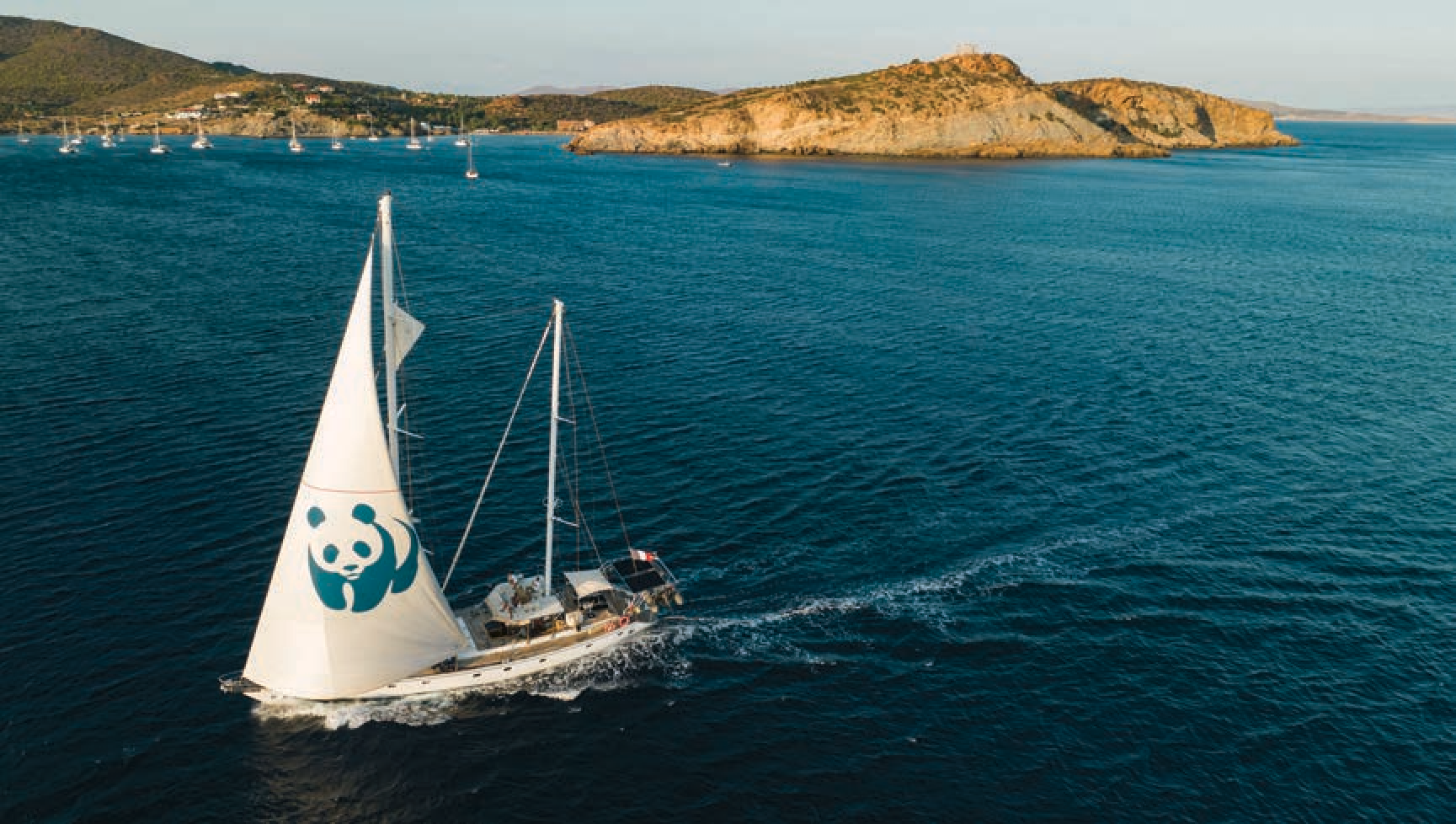
The WWF research vessel travels as part of the Mediterranean Marine Initiative.
The WWF research vessel, Blue Panda, crossed the Mediterranean from April to November 2023, making stops in France, Spain, Greece, and Croatia. With the central message “The Sea We Want” and with the support of AIGEA, the Civil Non-Profit Company for Cultural and Charitable Work, actions were carried out to investigate the condition of marine ecosystems and species of particular ecological interest.
Objectives and Actions
The mission of Blue Panda aimed to strengthen scientific research, raise awareness and inform the public about the protection of our country’s marine environment, and promote the objectives of the European Biodiversity Strategy. In particular, the goal is to expand Marine Protected Areas (MPAs) to 30% and areas of strict protection to 10% in Greece by 2030.
Research at Sounio
In the coastal zone below the Temple of Poseidon at Sounio, which forms part of the European Natura 2000 network, the research team led by Dr Maria Salomidou of the HCMR Institute of Oceanography collected data on the endangered Posidonia seagrass meadows and the pressures they face from recreational boat anchoring—one of the most significant threats to this valuable marine habitat. At the same time, experimental transplantation of young Posidonia shoots was carried out at key locations, supporting the natural restoration of the affected area. As Dr Salomidou stated: “Once again, according to our underwater surveys and findings, the significant gap and the urgent need for the implementation of effective marine protection in our country are clearly confirmed.”
Research in the Gyaros Marine Protected Area
In the Gyaros Marine Protected Area (MPA), the first protected marine area in the Cyclades, which is part of the European Natura 2000 network and has been protected from fishing in recent years, indicators of the marine ecosystem’s health were studied.
The HCMR team, in collaboration with the WWF Greece field team, conducted surveys of the abundance of key fish species (top predators) at Gyaros, using non-invasive methods such as scuba diving and stereo cameras. The effectiveness of the experimental transplantation of Posidonia shoots, carried out in the area in previous years, was also assessed.
Furthermore, through the use of an underwater remotely operated vehicle (ROV), the team explored the deeper (mesophotic) ecosystems of Gyaros, including extensive reefs of deep-water oysters—a rare type of marine habitat. Nicole Godsil, coordinator of the Blue Panda’s visit to Greece, emphasised the importance of protecting Greek seas: “Maintaining the health of the Greek seas and the Mediterranean through active protection is a fundamental prerequisite for the future and well-being of us all.”