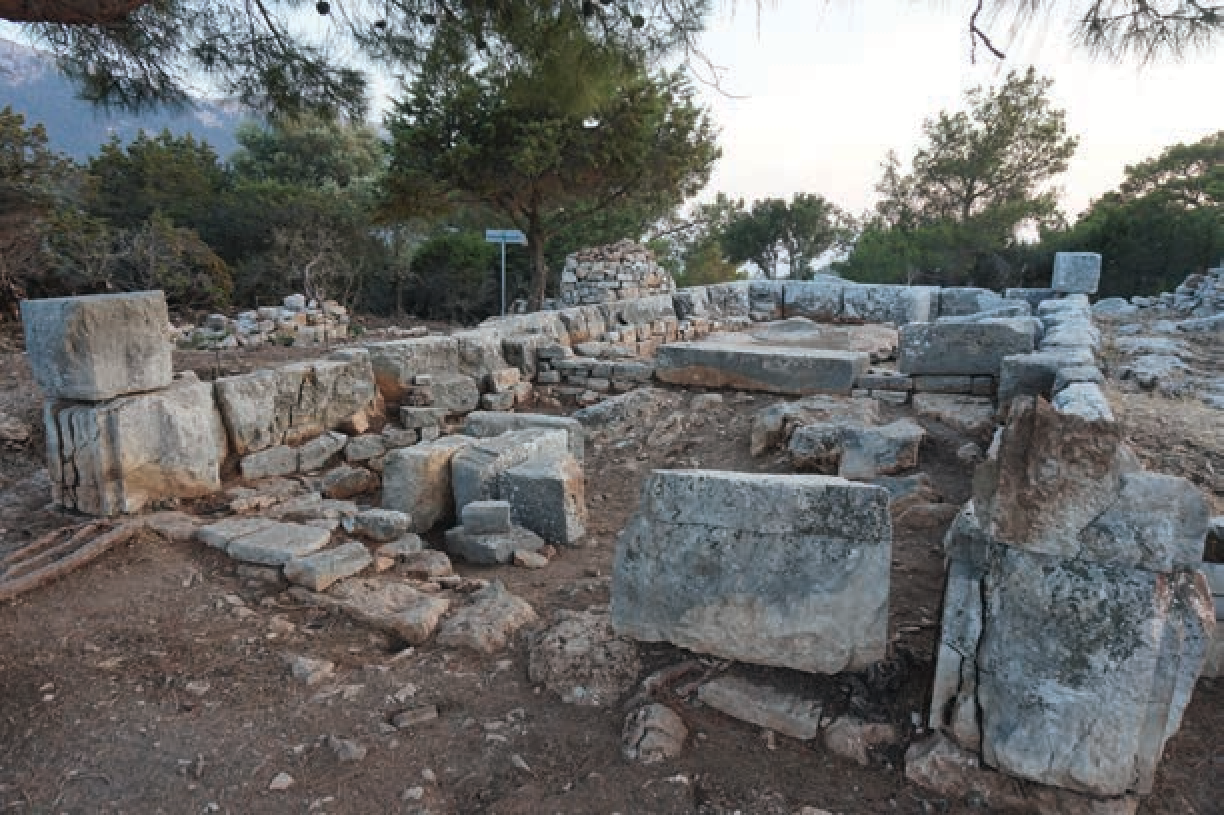
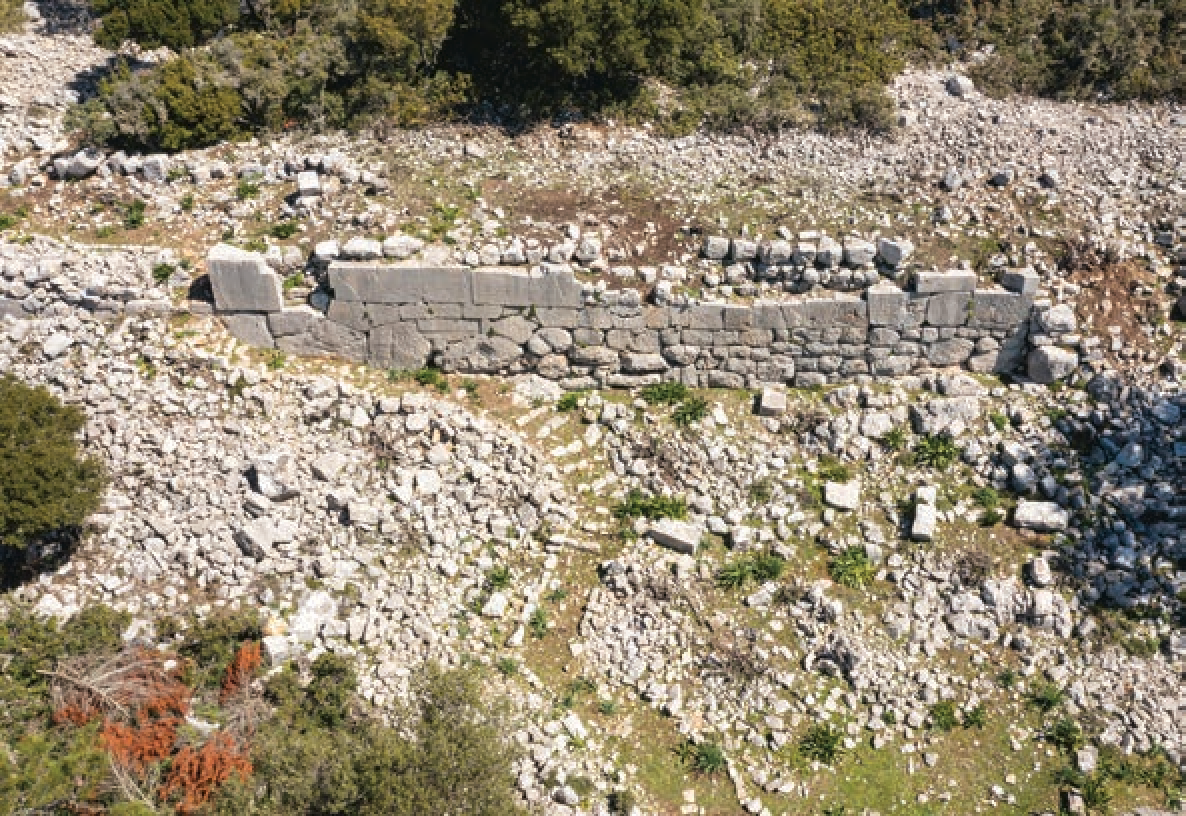
Agios Fokas. Hellenistic temple, view from the east.
The declared archaeological site of Kymissala lies 85 km southwest of the city of Rhodes. The systematic archaeological research conducted over 19 consecutive years by the Department of Mediterranean Studies of the University of the Aegean (Director: Professor Manolis I. Stefanakis) and the Ephorate of Antiquities of the Dodecanese has identified a large number of archaeological sites and monuments in the wider area. The region has been continuously inhabited from the Bronze Age through to Late Antiquity (6th century AD).
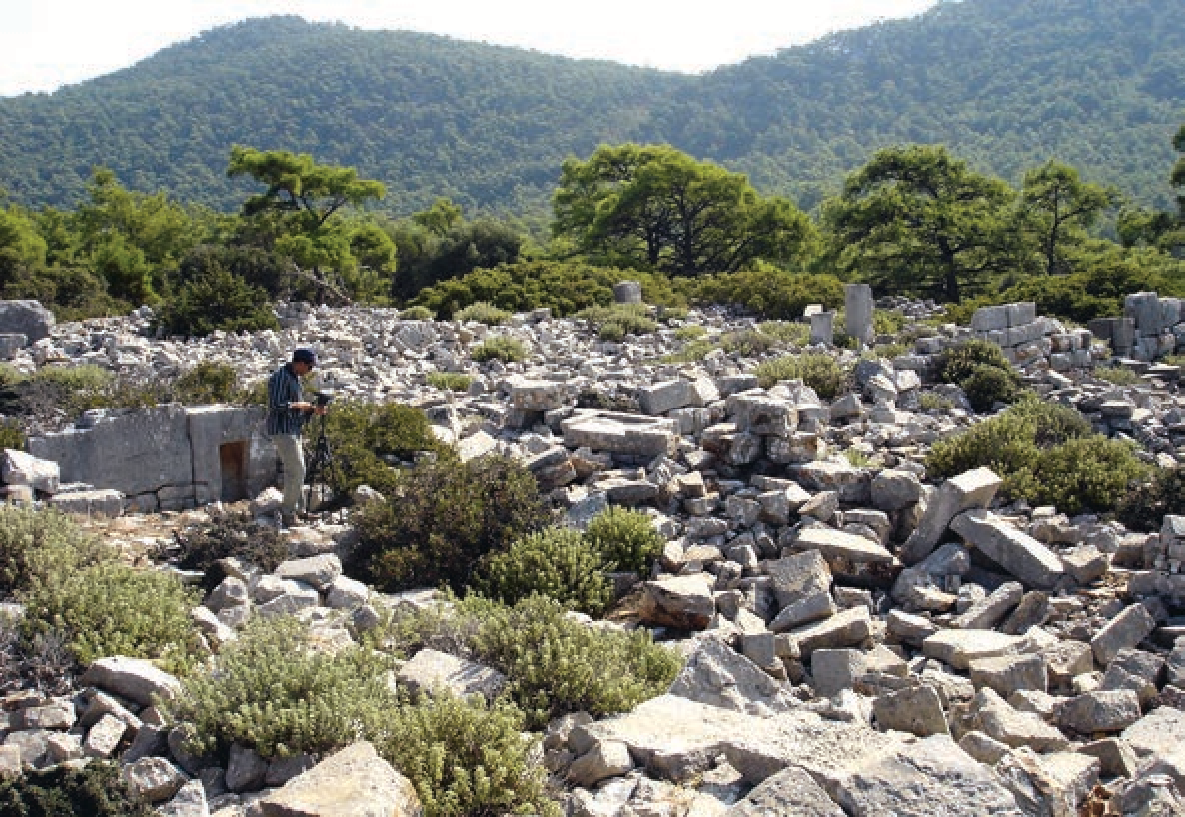
Covering an area of more than 21 sq km, the strongly fortified acropolis dominates the hill of Agios Fokas, controlling at least ten smaller settlements that developed around it. Adjacent to these settlements are cemeteries, the most important being the central necropolis. The hill forms the core of the deme of the Kymissaleis. The entire fortification wall that once encircled the acropolis survives, extending for approximately 560 m and dating to the 4th century BC. On the plateau at the summit lie the remains of a small Hellenistic temple of the 3rd–2nd century BC, which must have been the most important sanctuary of the deme of the Kymissaleis; however, the deity to whom it was dedicated remains unknown.
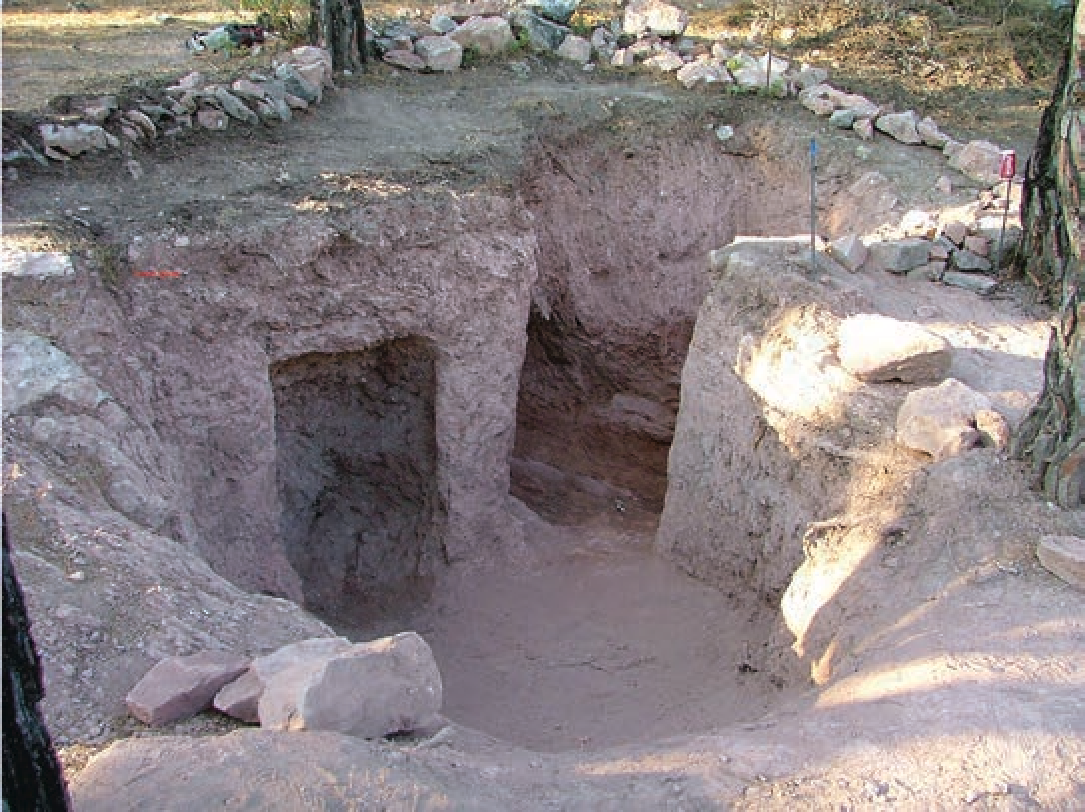
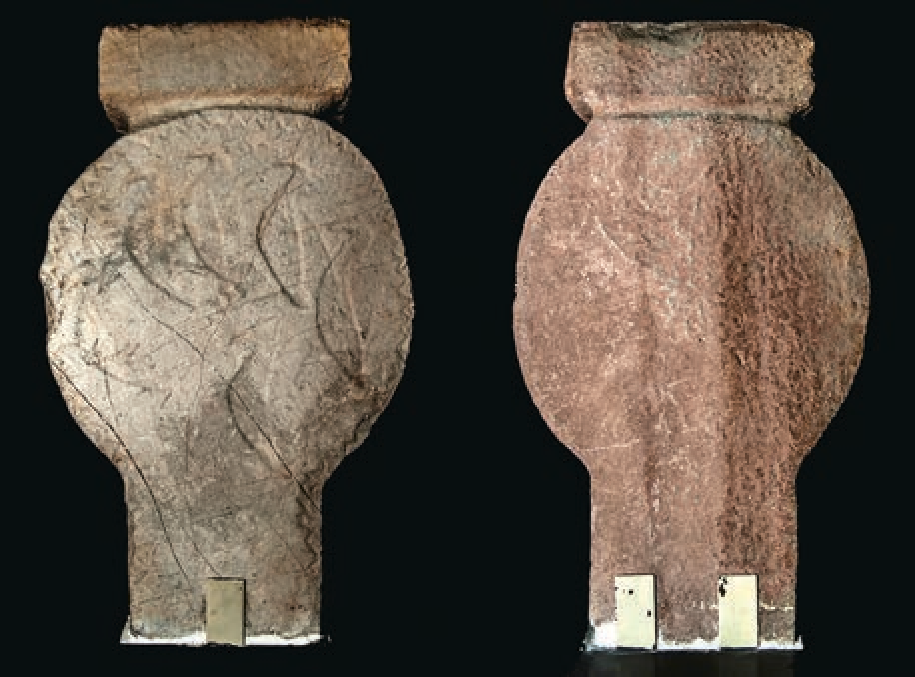
The tombs of the central necropolis are predominantly chamber tombs, hewn into the natural rock. They are arranged in rows along the slopes of the hills. A considerable number of above-ground funerary monuments are preserved, some rock-cut but most built structures, which supported stelai, altars, and rectangular inscribed bases decorated with mouldings. From the Archaic section of the central necropolis comes the famous Stele of Kymissala, a unique funerary monument in limestone, preserved to a height of 83 cm.
The area of Kymissala is also of particular environmental and ecological importance, as it lies at the centre of the “Akrámitis–Armenistis–Atavyros” zone, a wider region that has been included in the European Natura 2000 network of protected habitats. This comparative advantage of the area, combined with the promotion of its archaeological sites and monuments, can be utilized with the primary aim of developing the area into an archaeological-ecological park and making it available for use by the Ministry of Culture and the local community, fostering sustainable and environmentally responsible tourism development.
Image credit: University Excavation Archive (M. Stefanakis)