“Alexandrian Breath” – Spiritual and Cultural Center of the Patriarchate of Alexandria and All Africa
Donation Receiver:
Alexandrian Breath
Sector:
Culture
Implementation Body:
AEGEAS Non-Profit Civil Company
Year:
2024
Location:
Athens
The Metochion of the Patriarchate of Alexandria and All Africa is located in the Kypseli district of Athens. Its enduring mission is to contribute in various ways to contemporary Greek society by making its facilities available for the benefit of the local community, without discrimination on the basis of race, religion, or color.
Within this framework, the Spiritual and Cultural Center “Alexandrian Breath” was founded in 2016. Its management has been entrusted to the Representative of the Patriarchate in Athens, Metropolitan George of Guinea.
The Center aims to provide the African community, as well as local residents, with facilities for the organization of artistic and educational seminars, along with a variety of events and activities that foster interaction and communication among people of different national and cultural backgrounds.
Aegeas AMKE, in collaboration with the Stavros Niarchos Foundation, contributed to realizing the Patriarchate’s vision of establishing a modern center for education, culture, creativity, and recreation open to all, undertaking—from inception to completion—the project of converting an existing unused building into the new premises of “Alexandrian Breath.”
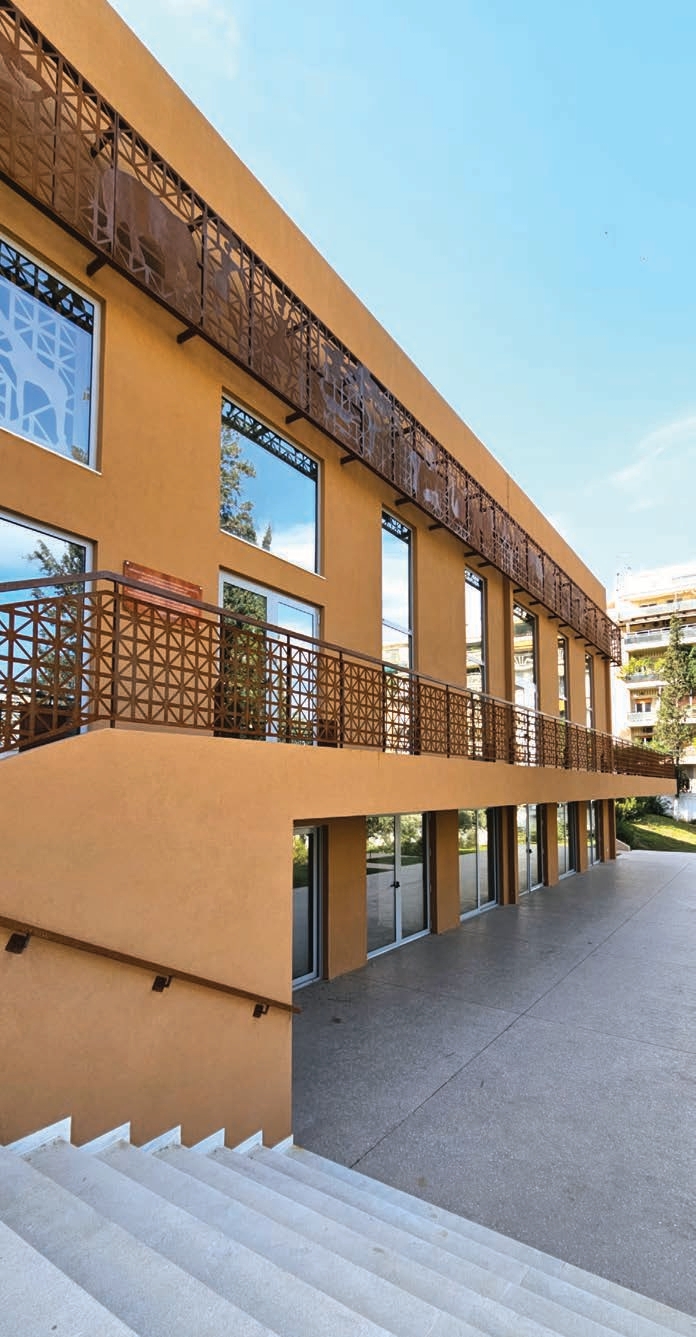
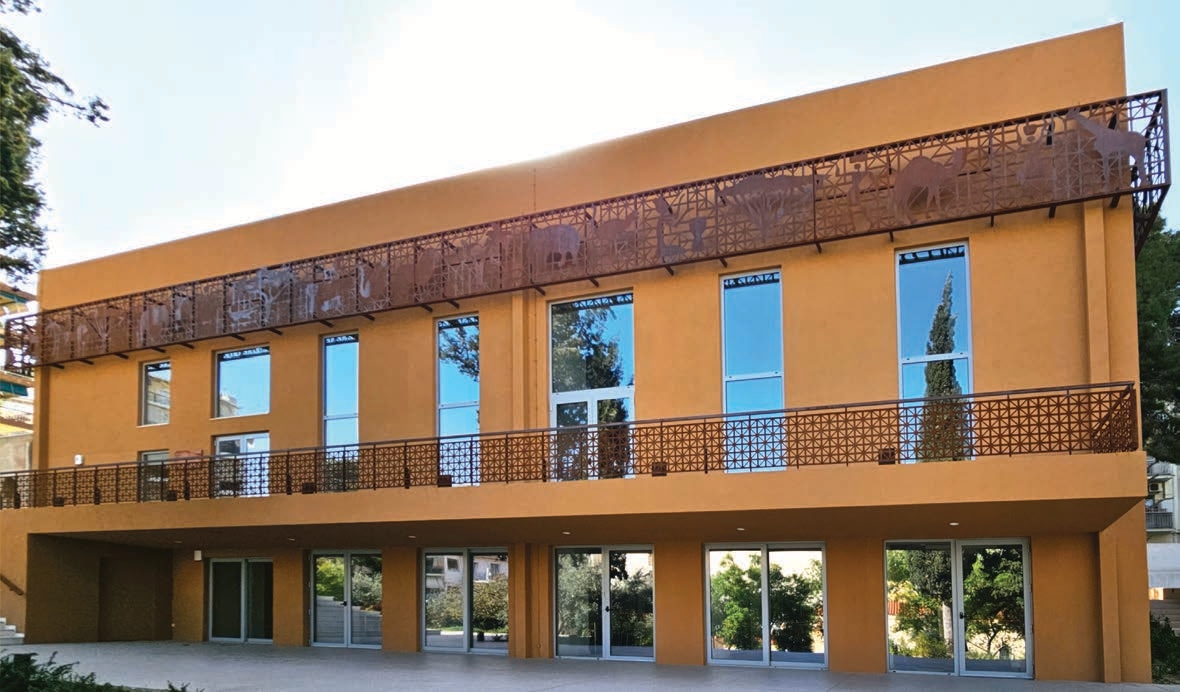
The building was designed and constructed so as to serve as a focal point for cultural activities, acquiring an architectural identity aligned with the humanitarian vision of the Patriarchate. A key intention was to restore the continuity between the public urban space and the open grounds of the Patriarchate’s property.
The former small windows were enlarged and transformed into points of connection between the interior and exterior spaces. As a reference to African art, the concept of weaving, along with symbols and patterns found in various forms of African artistic expression, was incorporated into the design.
In addition, the notion of the frieze, understood as a bearer of life, was perceptually employed, forming a band at the crowning of the building. This element was shaped as a grid based on a characteristic motif inspired by African symbols, incorporating figures, patterns, and signs, and creating an abstract visual representation.
The building is developed over three levels, which differ on its two main façades due to the natural slope of the terrain. Specifically, the level housing the event hall corresponds to the ground floor on the north side, while appearing as the first floor on the south façade.
Similarly, the lower level, which accommodates the classrooms and art activity spaces, is also located at ground level on the north side, with direct access to the spacious garden extending in front of it. Each of these two levels has a surface area of 416 sq.m.
The upper level includes a balcony and roof terrace and is situated on the first floor of the north side, with a total surface area of 140 sq.m.
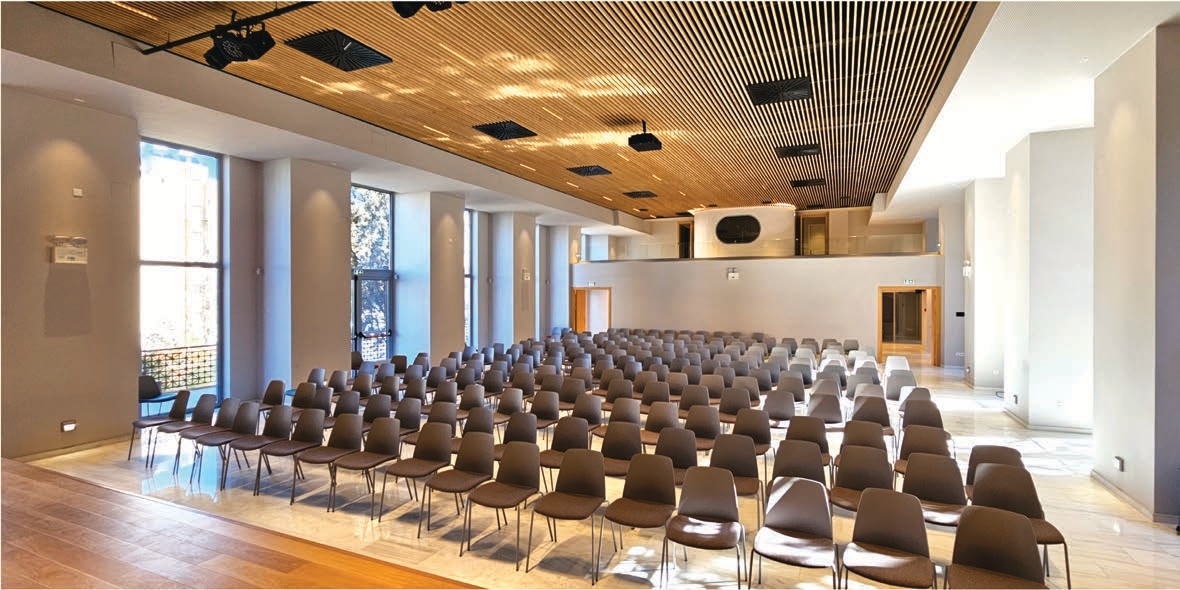
Η κύρια είσοδος του κτιρίου οδηγεί στη μεσαία στάθμη, όπου βρίσκεται η αίθουσα εκδηλώσεων, χωρητικότητας 200 ατόμων. Η αίθουσα αυτή λειτουργεί ως ο κεντρικός πυρήνας του κτιρίου και υποστηρίζει πολλαπλές χρήσεις. Πρόκειται για έναν χώρο διπλού ύψους με εσωτερικό εξώστη, πλήρως εξοπλισμένο με σύστημα προβολής, οθόνη, ηχητική και μικροφωνική εγκατάσταση. Τα καθίσματα μπορούν να προστεθούν ή να αφαιρεθούν ανάλογα με τις ανάγκες της εκάστοτε εκδήλωσης. Συμπληρωματικά, στο ίδιο επίπεδο συναντάται το foyer της αίθουσας, κοινόχρηστα WC με υποδομές για ΑμεΑ, καθώς και ένας κλειστός χώρος γραφείου.
On the upper level, two office spaces are located on either side of the staircase.
On the internal balcony, which has visual contact with the event hall, additional seating for spectators is provided, along with a control booth for lighting, sound, projections, and simultaneous interpretation.
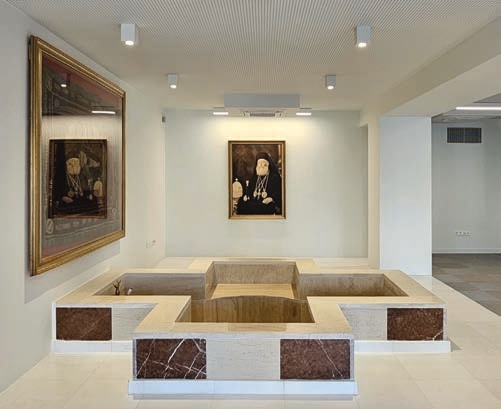
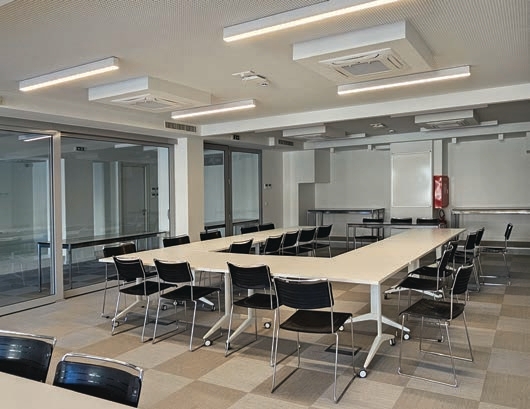
The lower level is divided into two main zones: the baptistery and the teaching area. This level includes two classrooms and art activity rooms, which can be combined into a single unified space.
In addition, there are auxiliary facilities, such as a canteen, shared WC facilities, and storage rooms. From this level, there is direct access to the specially designed outdoor area.
All levels are connected by a central staircase and an elevator, ensuring full accessibility for persons with disabilities throughout the building.
The redevelopment of the Metochion’s surrounding area breathed new life into the Athenian neighborhood, effectively revitalizing it through a comprehensive approach of gentle interventions, guided by the needs of the contemporary community and respect for the site’s historic character.
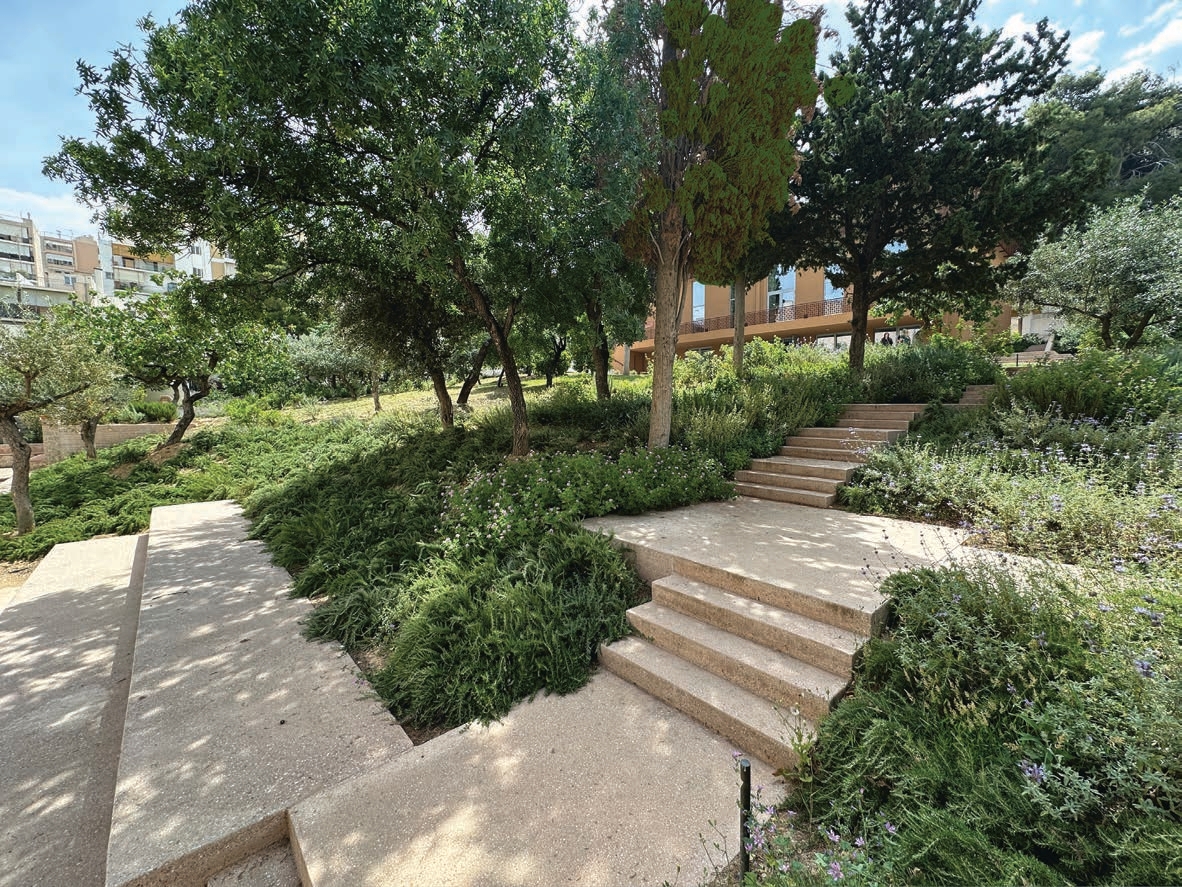
New functional outdoor spaces were created, and the connection between the Church of Saints Athanasios, Nikolaos, and Photios and the Patriarchate of Alexandria’s Cultural Center was organized into a coherent and accessible circulation, ensuring ease of movement.
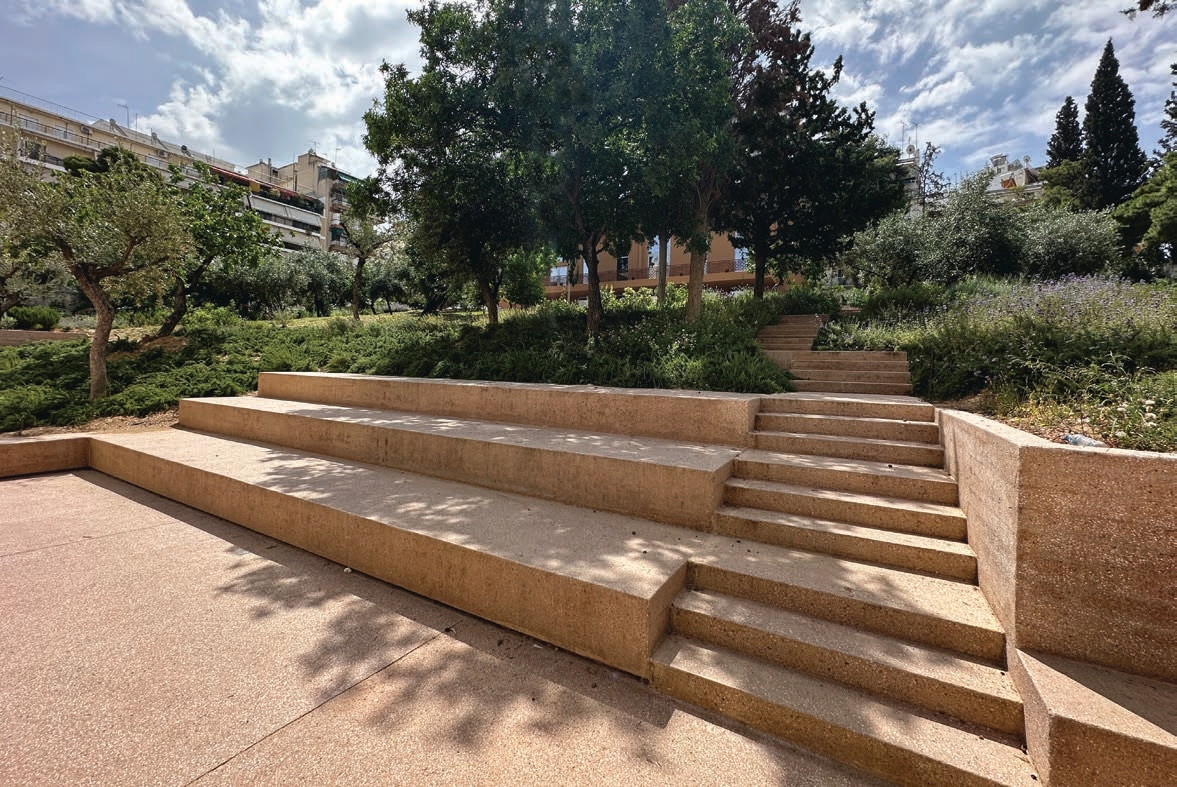
A multi-purpose outdoor area was established for cultural and educational activities, children’s events, and public gatherings. Terraced seating, benches, and an accessible pathway for persons with disabilities were also constructed.
The large existing trees, including the old cypresses, were preserved, while new plantings of olive and plane trees, along with evergreen and aromatic shrubs, enhanced the area’s Mediterranean biodiversity.
Today, the site functions as a vibrant socio-cultural hub and a welcoming park for local residents, offering spaces that encourage meeting and interaction among people of all ages. It strengthens the role of the Metochion as a living center of the local community, providing a daily destination for recreation, social life, and connection with nature, and contributing to the reinforcement of social bonds, exchange, and overall quality of life.
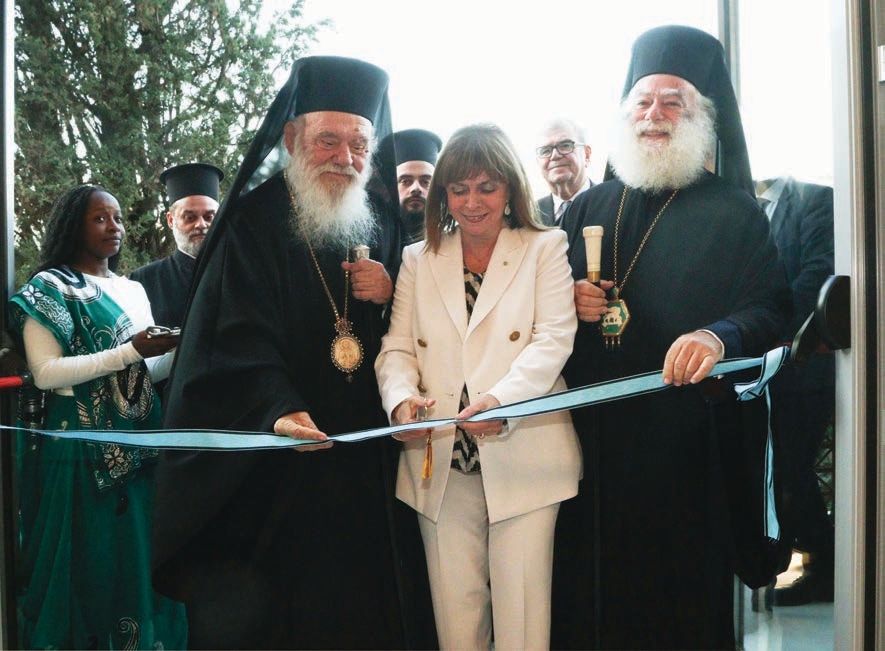
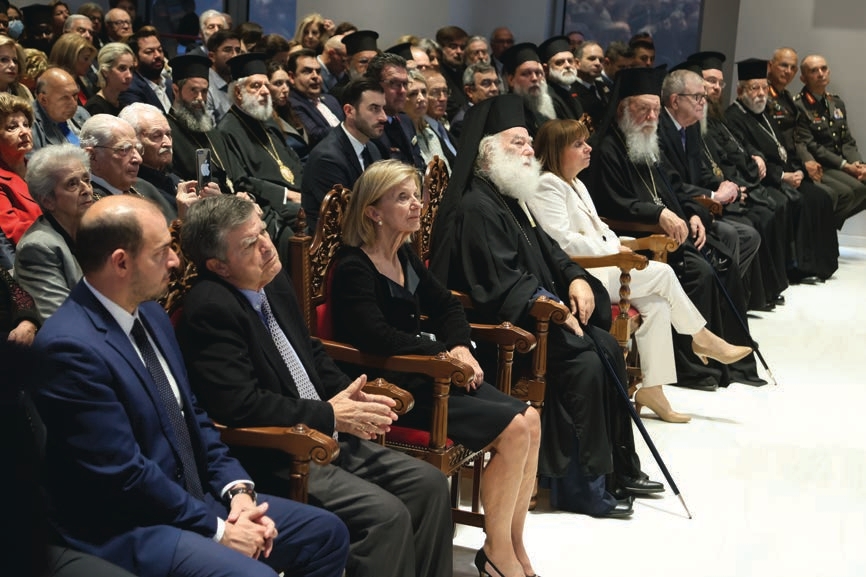
Τα εγκαίνια του νέου πνευματικού κέντρου τελέστηκαν στις 4 Νοεμβρίου 2024 από τον Πατριάρχη Αλεξανδρείας και πάσης Αφρικής κ. Θεόδωρο Β’, παρουσία της Προέδρου της Δημοκρατίας κ. Κατερίνας Σακελλαροπούλου και του Αρχιεπισκόπου Αθηνών και πάσης Ελλάδος κ. Ιερωνύμου.