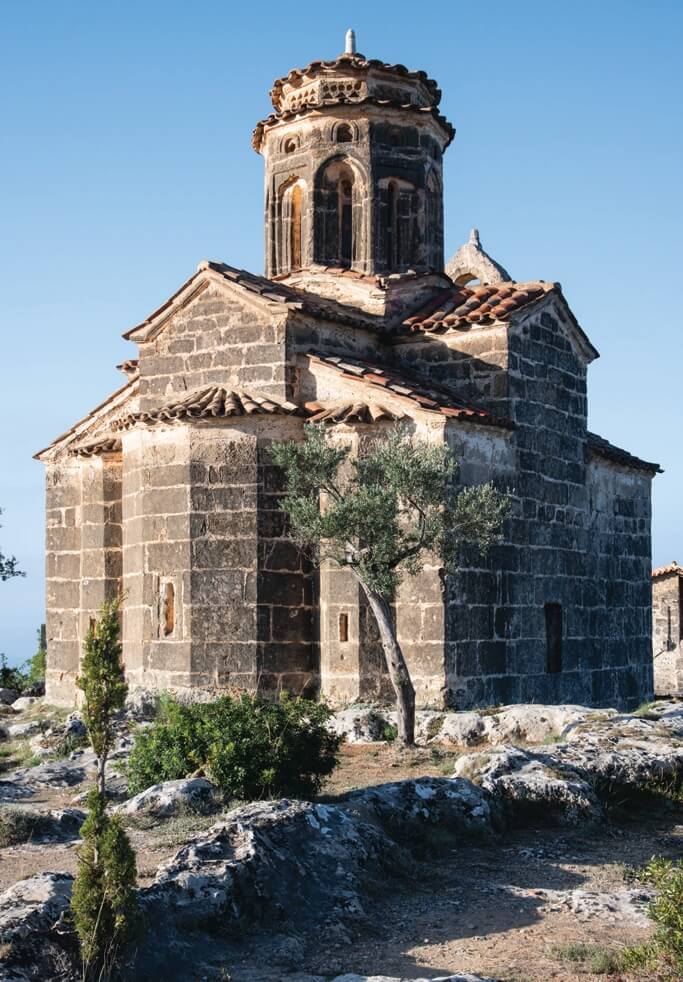
Holy Church of Saint Sophia
Sector:
Religion
Implementation Body:
AEGEAS Non-Profit Civil Company
Year:
2022
Location:
Hagia Sophia, Messenian Mani
In the region of Messenian Mani, the so-called Outer Mani, which extends from the coast of Verga to Lagada and Poliana, one encounters an exceptionally large number of Byzantine and post-Byzantine churches. These monuments stand as witnesses to the religious life and to the cultural and social conditions that prevailed in the area from the early Byzantine period through the Ottoman era.
One of the finest examples of 17th-century ecclesiastical architecture in the region is the Church of Hagia Sophia, located on the outskirts of the homonymous village (formerly Gournitsa) above Kardamyli, built on the site of an ancient quarry. The church was erected in 1630 and belongs to the type of the two-column cross-in-square domed church. Constructed of local poros stone in regular masonry, it impresses with its slender proportions.
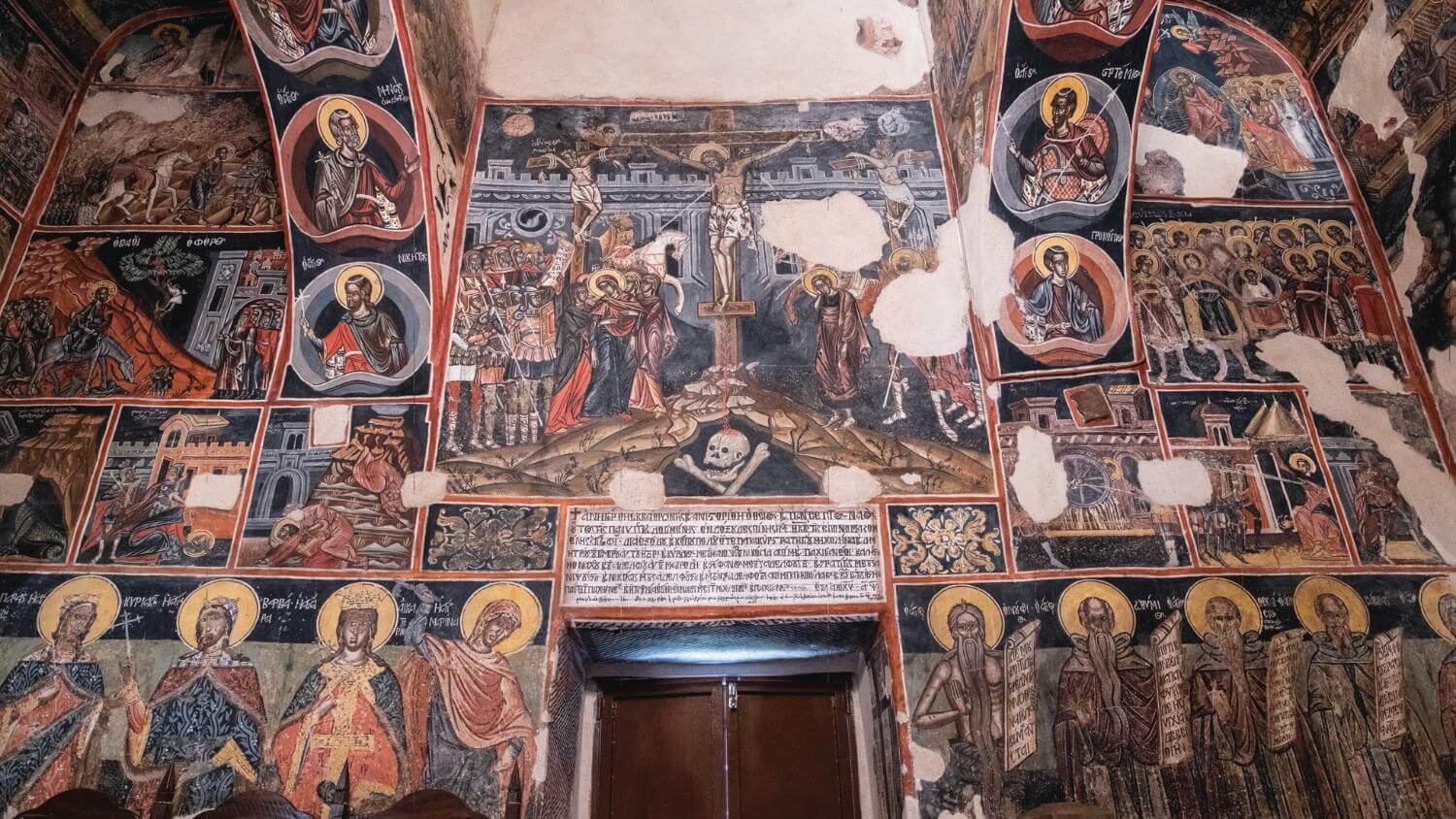
Its interior is entirely covered with wall paintings dated by inscription to the year 1700, executed by the painter Makromallis from Nisi (present-day Messene). Through the donation of AIGEAS AMKE, the conservation and protection of this significant painted ensemble were made possible.
DONATION OF THE NON-PROFIT CIVIL COMPANY AEGEAS
- Conservation of the wall-paintings in the church.