Holy Monastery of Samouil
Sector:
Religion
Implementation Body:
AEGEAS Non-Profit Civil Company
Year:
2022
Location:
Saidona, Messenian Mani
The Holy Monastery of Samouil is built in a gorge of exceptional natural beauty on the western slope of the “Sotiritsa” peak of Mount Taygetos, between the villages of Saidona and Exochori in Messenian Mani. Known locally as Samouili, it takes its name from its founder, the monk Samouil Panagiotakis.
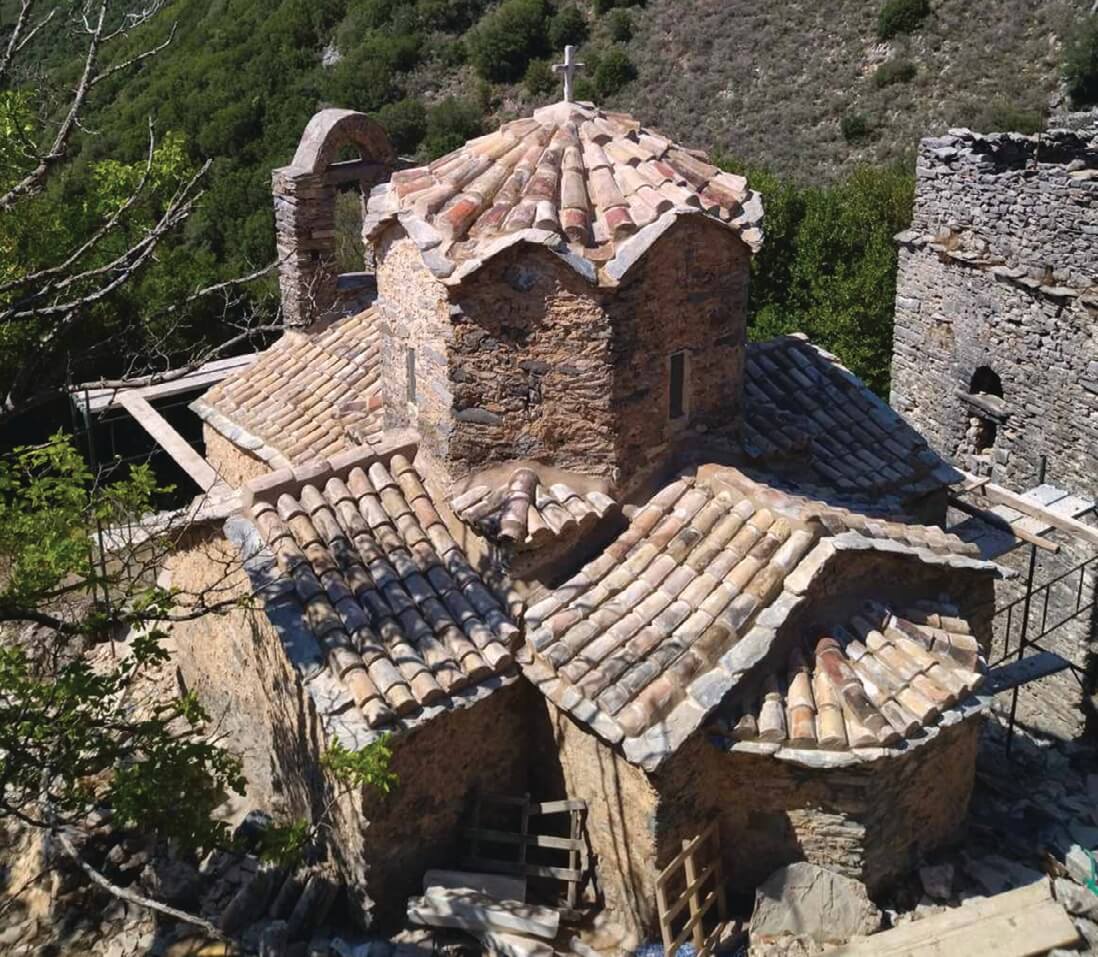
It is a typical example of a fortified monastery (kastro-monastiri), with an enclosure wall and a tower protecting the katholikon. During the Ottoman period, together with the Monastery of Vaidenitsa and the tower of Captain Kitriniaris, it formed the defensive triangle of Saidona, safeguarding the villages of Kardamyli and Androuvista from Ottoman raids.
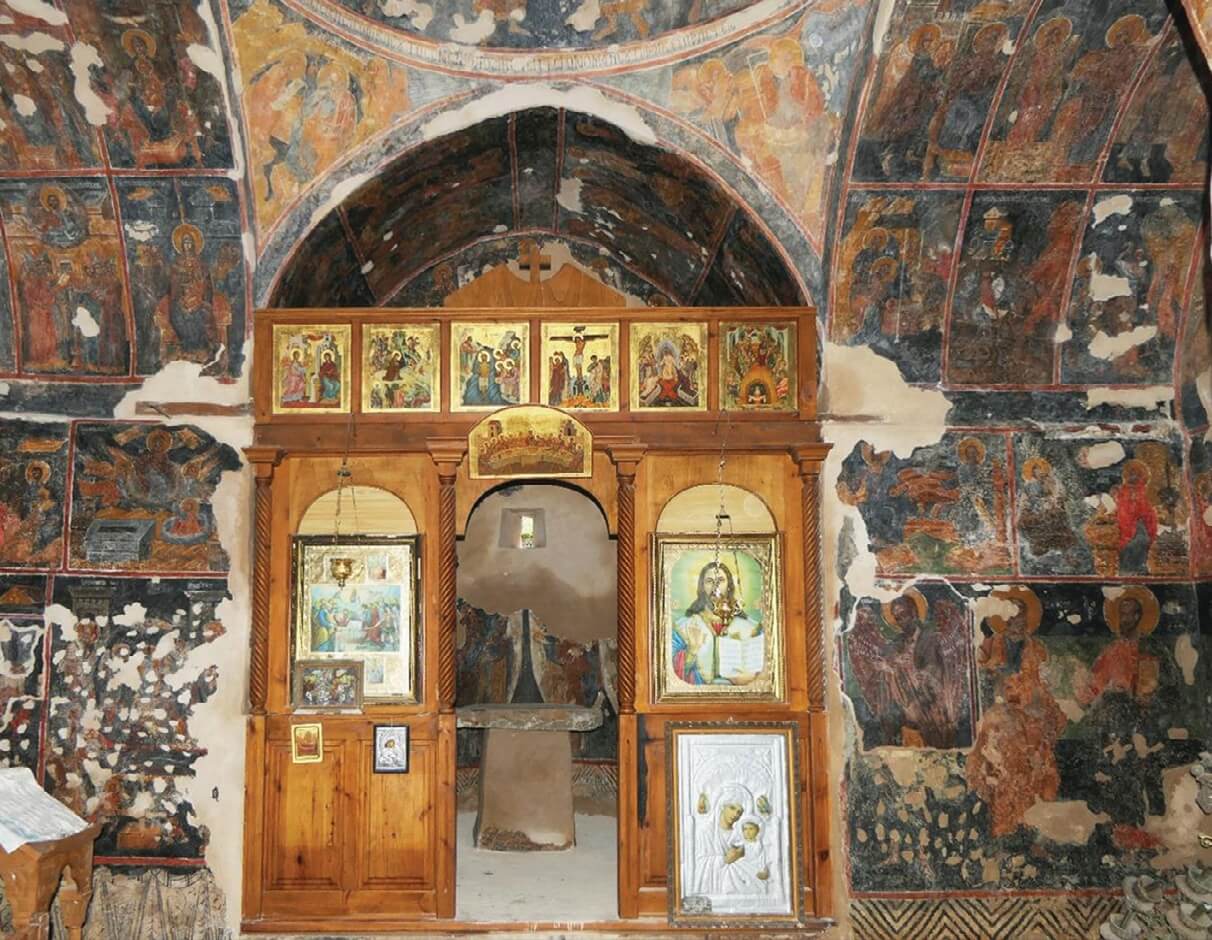
An inscription in the katholikon bears the date “1633,” corresponding either to its foundation or to its painted decoration. The church is dedicated to the Dormition of the Theotokos. It has a free-cross plan with a dome at the intersection of its arms and is entirely decorated with wall paintings executed in at least two phases: the first half of the 17th century and around 1760.
During the Greek War of Independence in 1821, as well as in the later years of the National Resistance (1941–44), the monastery served as a refuge for many fighters. Until the interwar period, a small number of monks lived in its cells, as it functioned as a dependency (metochion) of the Monastery of Mega Spilaio.
Due to its abandonment, harsh environmental conditions, and the aging of its materials, the monumental complex faced serious structural and conservation issues. AIGEAS AMKE supported the efforts of the Ephorate of Antiquities of Messenia to safeguard the historic fortified monastery by undertaking the conservation of the katholikon’s wall paintings, the repair of its roof, and the preparation of a restoration study for the partially collapsed tower.
DONATION OF THE NON-PROFIT CIVIL COMPANY AEGEAS
- Repair of the roof of the katholikon.
- Conservation of the wall paintings.
- Restoration study of the Monastery Tower.