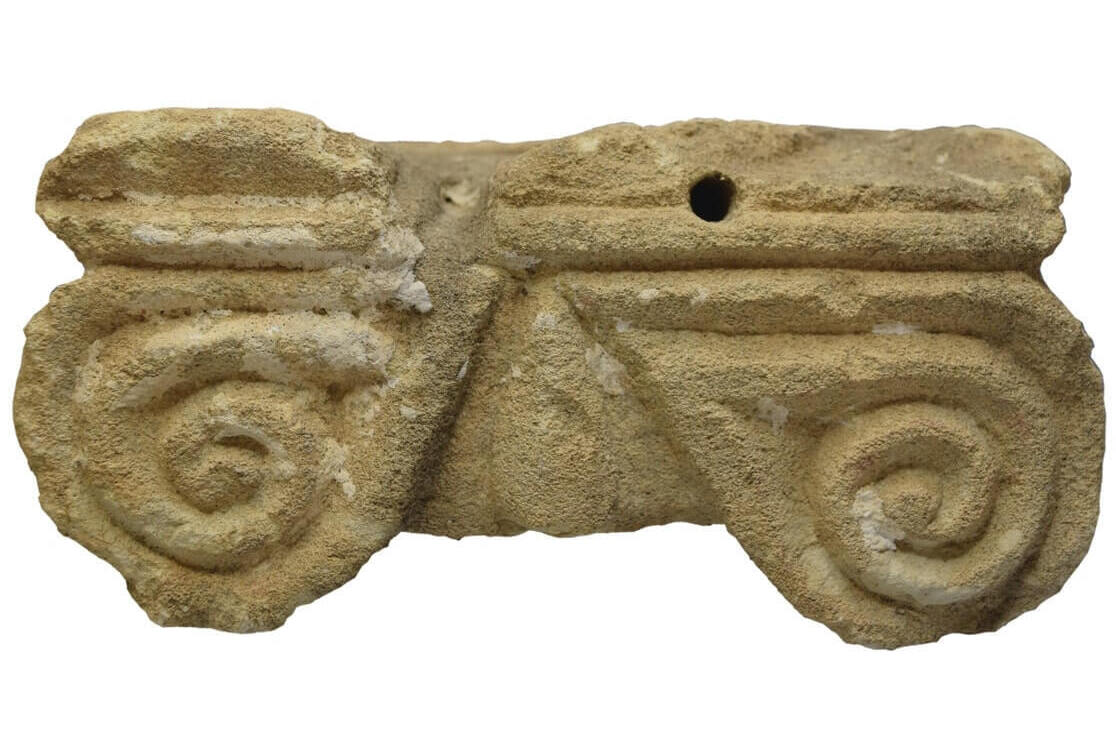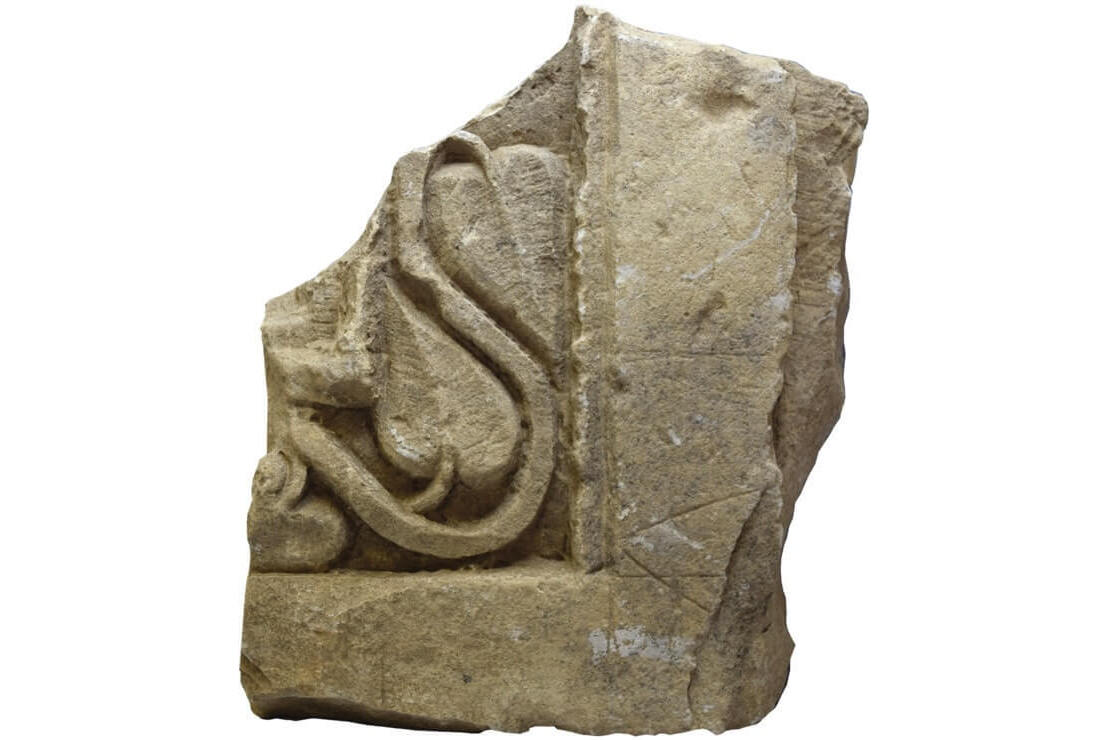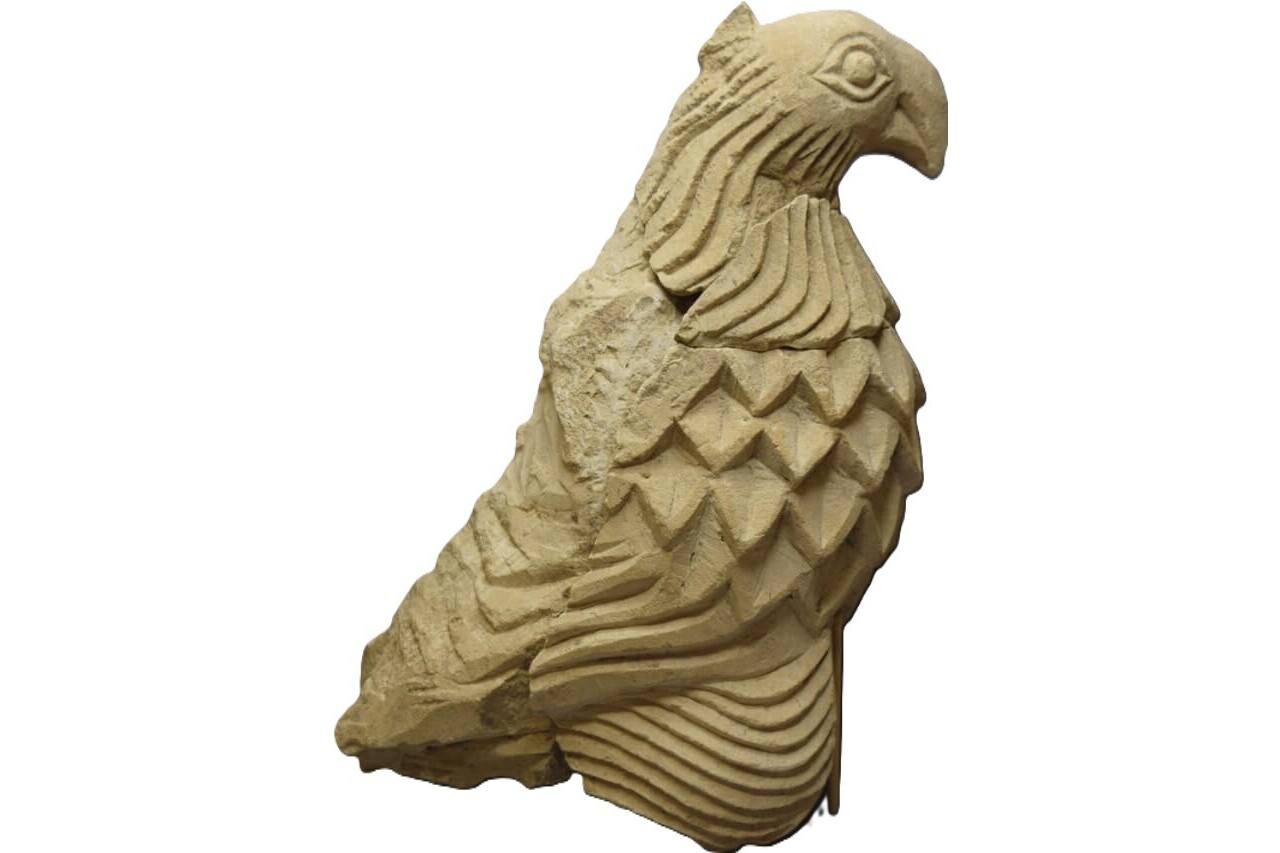
Eagle from the early Byzantine capitals.
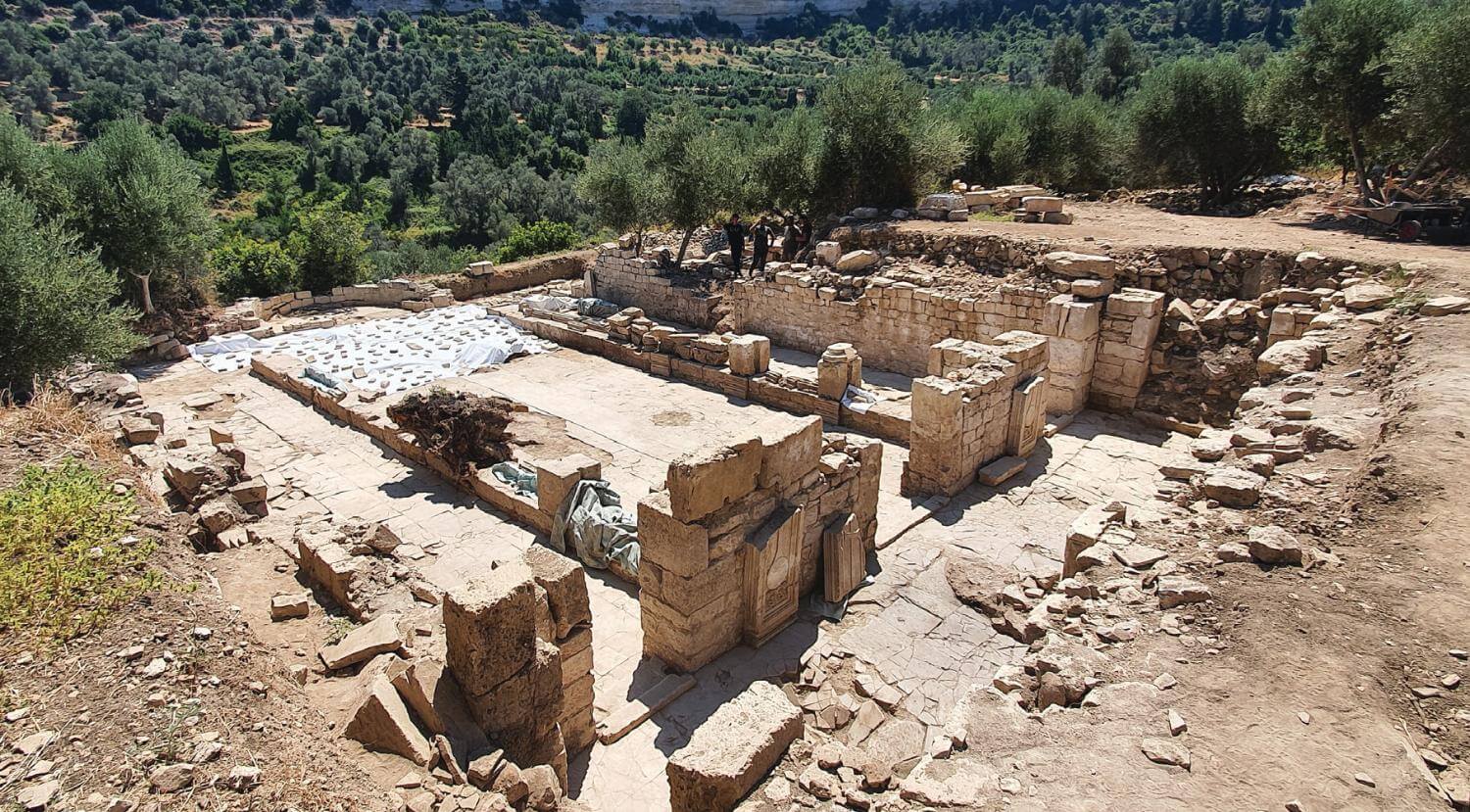
Eleutherna was one of the most important capitals of Crete. Systematic excavations conducted since 1985 by the University of Crete, under the direction of Professor Nikos Stampolidis, on the western and eastern slopes of the hill of Eleutherna, have brought to light significant architectural remains and thousands of finds. These constitute indisputable testimony to the history of the ancient city, which spans 4,500 years (3rd millennium BC–14th century AD), when it was destroyed by the Venetians in order to subdue its rebellious inhabitants.
The ancient city extends along the northwestern foothills of Mount Ida (Psiloritis), at an altitude of 380 metres, 25 kilometres southeast of the city of Rethymno. Its main centres are located on two elevations: the hill of Prines (Ancient Eleutherna) and the plateau of the present-day village of Eleutherna.
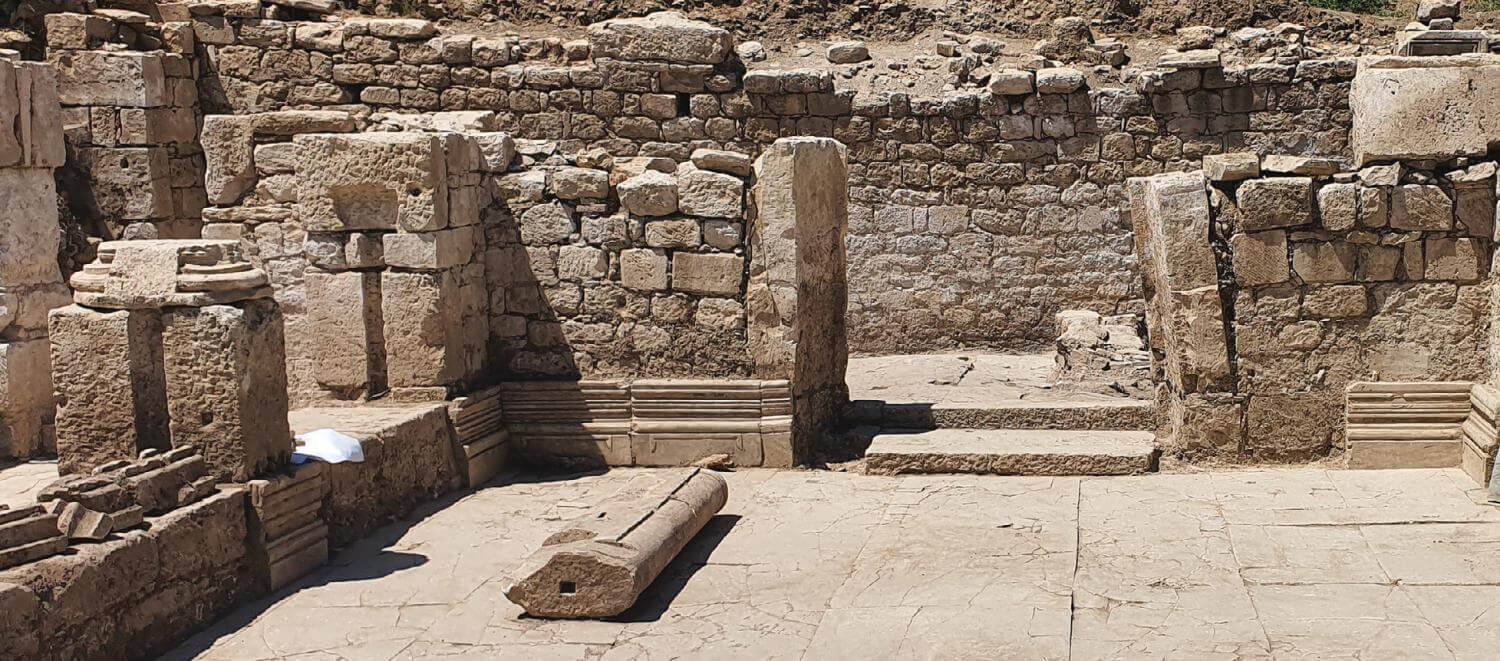
On the eastern side of the hill of Ancient Eleutherna, the Hellenistic, Roman, and Early Byzantine city is being excavated. Three basilicas have been identified there: those of the Archangel Michael, Saint Irene of God, and the so-called Basilica of Saint Mark, which has been systematically investigated since 2018. The church was most likely founded on the remains of an earlier structure, and its walls incorporate spolia, including architectural members, inscriptions, and sculptures from buildings of earlier phases of the city.
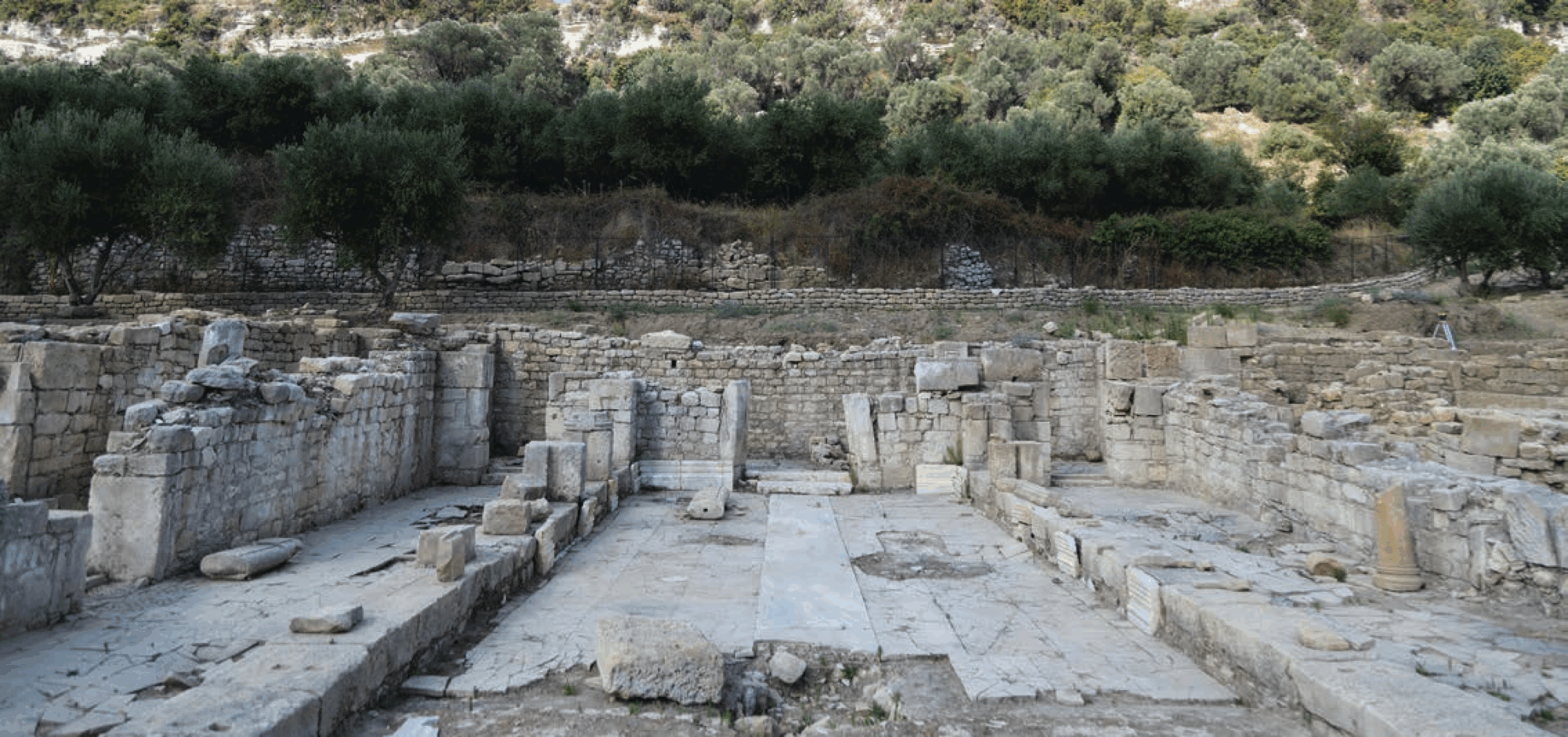
The Basilica of Saint Irene is the largest basilica excavated at Eleutherna to date and probably served as its “metropolitan” church. At least three construction phases can be distinguished, two of which date between the 5th and 7th centuries AD.
The second basilica has been excavated together with its annexes over the past five years. Based on current evidence, it dates to around AD 530. It is a three-aisled basilica with two side narthexes, to the north and south, giving it the appearance of a five-aisled structure. To the south, buildings of a workshop area—most likely an olive press—are being excavated, while to the north a square atrium has been uncovered. To the west and northwest of its narthex, water cisterns and additional annexes have come to light, and in 2023 and 2024 a paved road was identified, leading from west to east toward the northern entrance of the basilica.
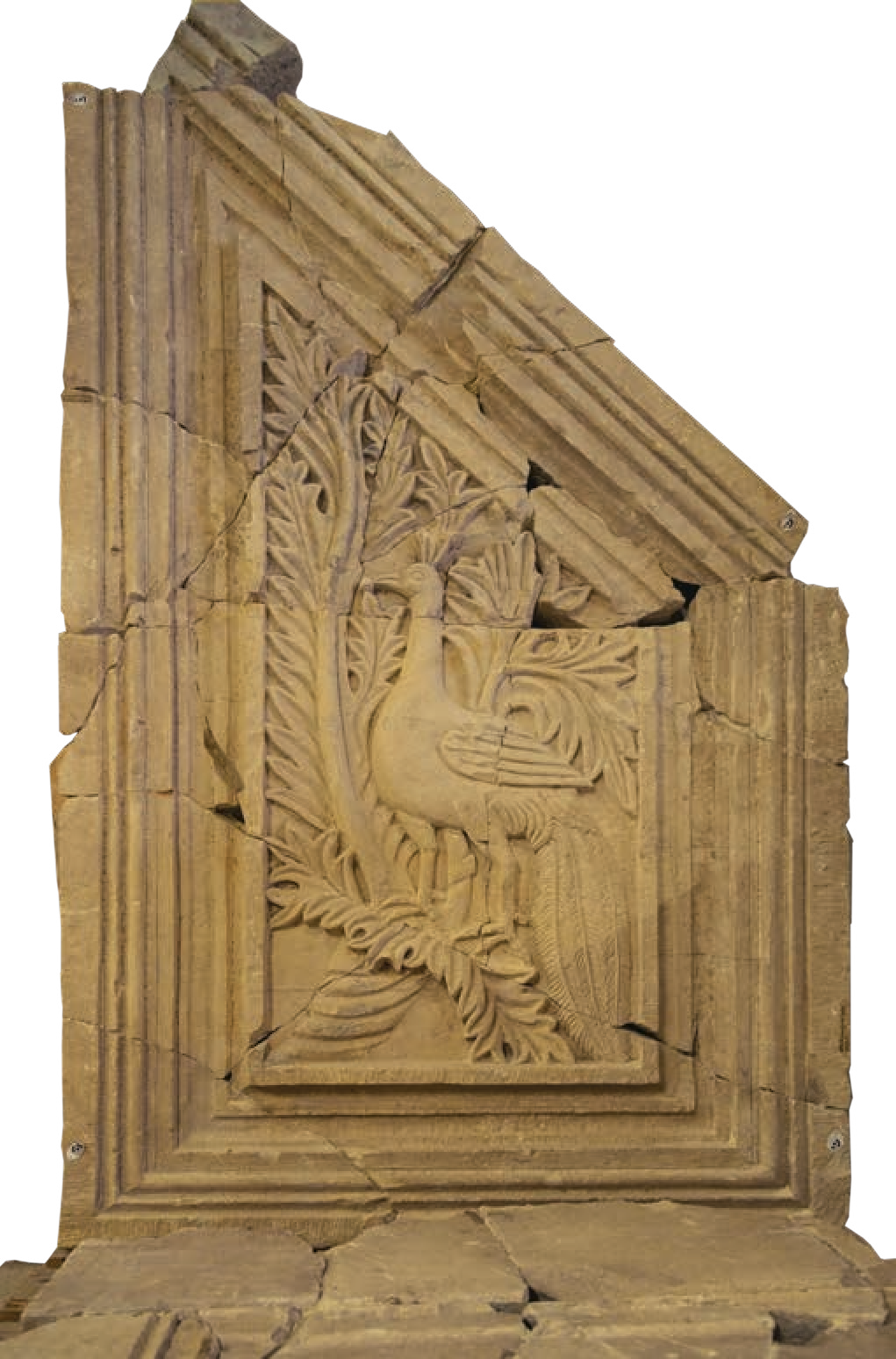
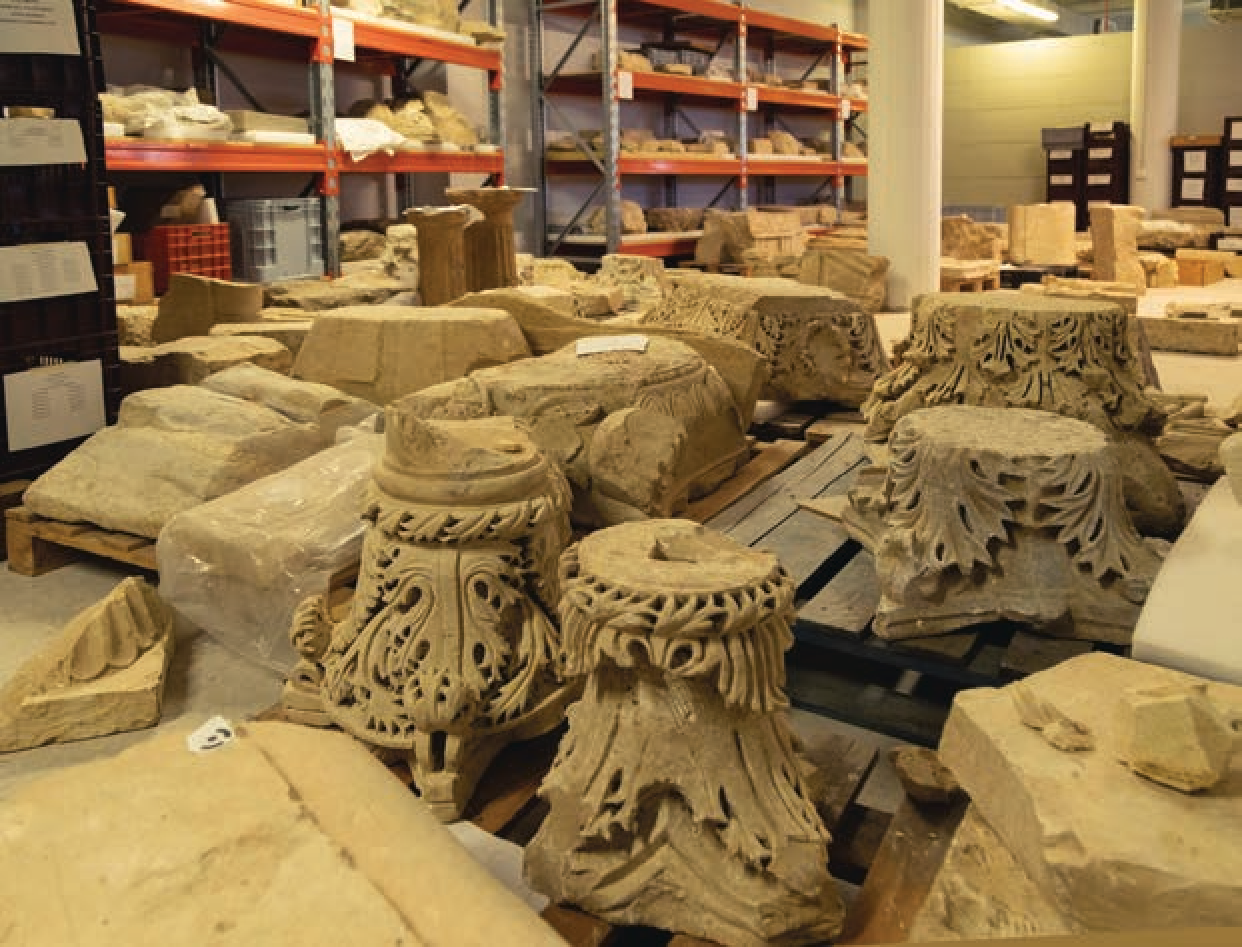
Its intensive investigation has made it clear that this is the most important basilica in the eastern and central Mediterranean and a rare example of “Justinianic” architecture and sculpture. More than 30 carved and double-sided marble closure slabs with exceptional relief representations have been uncovered, along with several cornices, dozens of bi-zonal capitals with eagles and bucrania, impost capitals, and mullions from bi- or triple-lobed windows, all preserved in good condition. Over the past two years, these elements have been undergoing conservation, together with the parapets of the staircase and the semicircular balustrade of its ambo.
The above make it necessary to restore the monument to a significant height, constituting one of the most demanding restoration projects of its kind. The relevant studies were approved in 2024 by the Central Archaeological Council. Upon completion of the works, the monument, together with its protective shelter, will become an important destination for religious tourism, as it will stand as a unique accessible monument within a landscape of exceptional natural beauty.
It will become a destination monument for the thousands of visitors to our country, to Crete, and to Eleutherna, which, in addition to its “Homeric” necropolis and its Museum, will also include the quarter of the Early Christian basilicas. With this unique trilogy reflecting the continuity of its cultural heritage, the island will not rest solely on its Minoan past, but will also present its contribution to the formation of Greek and Christian civilization, from the 10th century BC to the Byzantine period.
Image source: archive of Prof. N.Ch. Stampolidis